

Big brother is watching you stands as an iconic phrase that echoes through literature, culture, and modern society, originating from George Orwell’s masterful novel Nineteen Eighty-Four. This powerful expression captures the essence of omnipresent surveillance in a dystopian world where privacy vanishes under the gaze of an all-seeing authority.
Orwell crafted this concept amid the turmoil of mid-20th-century politics, drawing from real-world totalitarian regimes to illustrate how power corrupts and controls. In the story, citizens of Oceania live in perpetual fear, knowing every action, word, and thought could be monitored, a scenario that mirrors historical oppressions and foreshadows contemporary digital tracking.
What Does “Big Brother Is Watching You” Really Mean?
The phrase big brother is watching you symbolizes the ultimate invasion of privacy in a totalitarian state, where an enigmatic figure embodies unchecked authority. In Orwell’s 1984, it appears on posters throughout Oceania, serving as a constant reminder that no one escapes scrutiny.
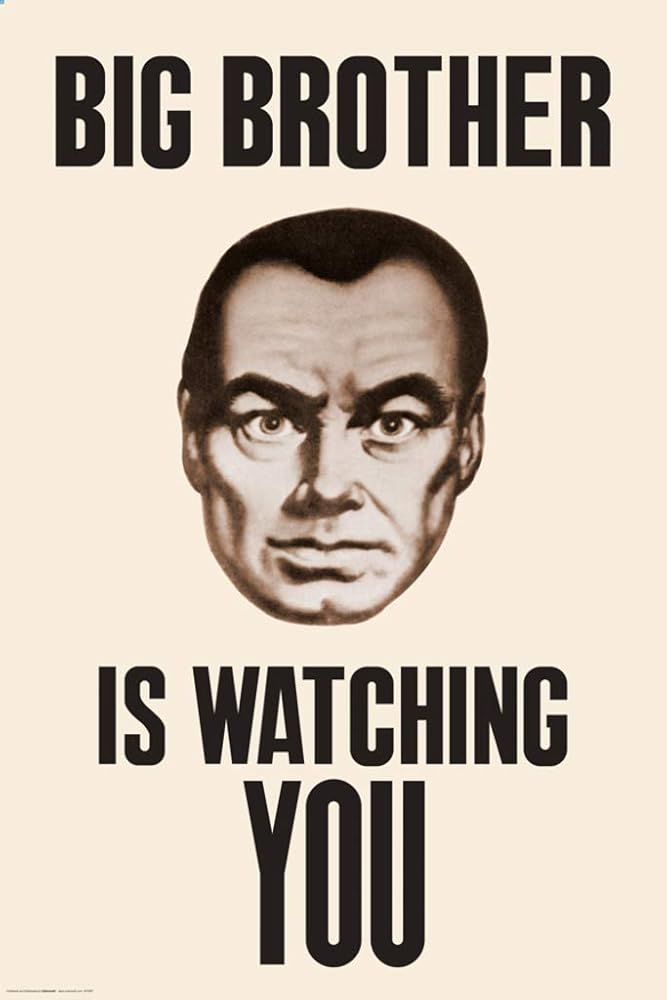
This idea of big brother isn’t just about physical observation; it delves into psychological control, making individuals self-censor out of paranoia. Big brother represents a paternalistic yet tyrannical force, promising protection while demanding absolute obedience. Scholars have argued that big brother represents historical dictators, blending benevolence with terror to maintain dominance.
At its core, big brother is watching you critiques how regimes use surveillance to suppress dissent. In the novel 1984, citizens internalize this watchful presence, leading to a society where rebellion seems futile. Orwell drew from his observations of propaganda machines, showing how such systems erode trust and autonomy.
The phrase highlights the erosion of personal freedoms, where personal thoughts become public property, forcing conformity. This meaning extends beyond fiction, influencing discussions on ethics in technology and governance.
The lasting impact lies in its universality; big brother is watching you warns that without safeguards, any society can slip into similar patterns. It prompts reflection on power dynamics, urging awareness of subtle controls in daily life.
Who Was George Orwell and How Did He Create This Iconic Phrase?
George Orwell, born Eric Arthur Blair in 1903, was a prolific writer whose works dissected imperialism, socialism, and authoritarianism. Orwell adopted his pen name in 1933, drawing from the River Orwell in England, symbolizing his connection to British landscapes amid global critiques. His early career included stints as a colonial policeman in Burma, experiences that fueled his disdain for oppressive structures, evident in essays like “Shooting an Elephant.” Orwell wrote with unflinching honesty, blending journalism and fiction to expose societal flaws.
During World War II, Orwell served in the Home Guard and worked for the BBC, where he encountered wartime censorship and need to distort facts for morale. He also resented the wartime censorship, viewing it as a betrayal of truth that mirrored fascist tactics. From this, Orwell got the idea for many elements in his novels, including the manipulative ministries.
George Orwell’s time at the government department known as the Ministry of Information, under figures like Brendan Bracken, inspired satirical parallels in his writing. He saw how leaders manipulate information which he felt undermined democracy, planting seeds for his dystopian visions.
Orwell’s personal battles with illness, including tuberculosis, added urgency to his warnings. He completed Nineteen Eighty-Four in 1948 on the remote island of Jura, distilling his fears into a narrative that has shaped political discourse ever since.
- Core Warning: Surveillance erodes autonomy; safeguard privacy to maintain individuality.
- Historical Lessons: Learn from past regimes to prevent future oppressions.
- Modern Relevance: Apply Orwell‘s critiques to tech and governance for ethical progress.
- Human Spirit: Even in defeat, stories like Winston‘s inspire resistance against conformity.
- Enduring Impact: The phrase’s cultural penetration ensures ongoing dialogue on power and truth.
Exploring the Dystopian Setting of Nineteen Eighty-Four
The novel is set in a grim 1984, where Oceania is one of three superstates in perpetual war with Eurasia and Eastasia. This endless conflict justifies rationing, poverty, and mobilization, keeping the populace distracted from internal flaws.
Orwell’s depiction of London as a decaying metropolis, filled with rubble and Victory Mansions that are anything but victorious, paints a vivid dystopia where hope is systematically extinguished. Air raids and shortages are normalized, reinforcing the Party’s narrative of external threats.
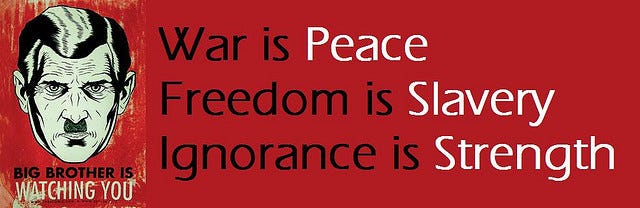
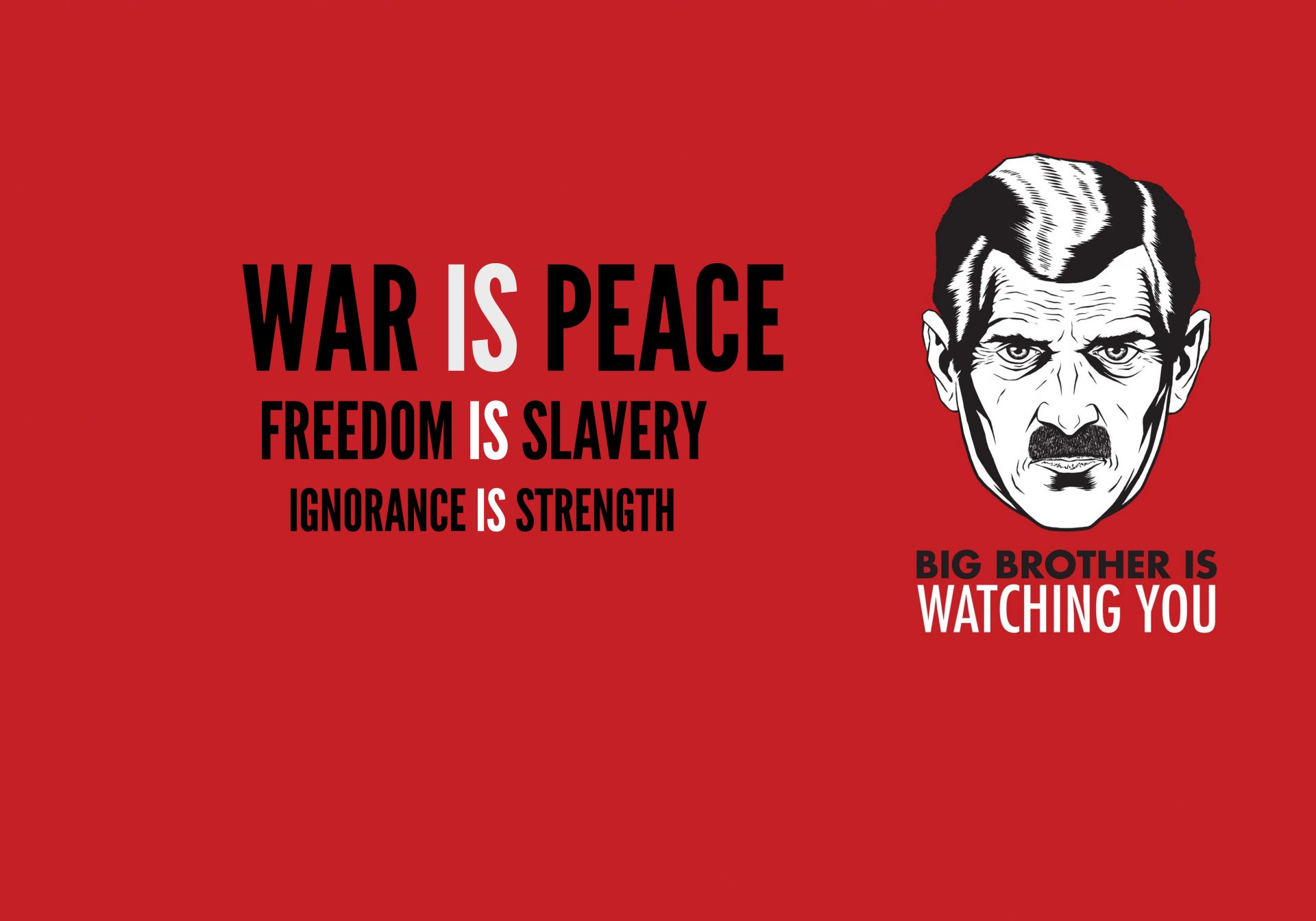
In this sci-fi dystopia, technology serves oppression rather than progress. Telescreens in every home broadcast propaganda while recording movements, embodying constant surveillance. The Party’s slogans—”War is Peace,” “Freedom is Slavery,” “Ignorance is Strength”—enforce doublethink, a mental gymnastics that accepts contradictions. Orwell uses these elements to show how language and history are weaponized, with the Ministry of Truth rewriting records to erase inconsistencies.
Life in Oceania is regimented, from physical jerks enforced via telescreen to the prohibition of unapproved relationships. This setup illustrates a kind of society where individuality is a crime, and collective delusion sustains power.
The Symbolism Behind the Character Big Brother
The character big brother is never seen in person, yet his image dominates every billboard and screen, portraying a stern, mustachioed man as both leader and guardian. Big brother figured as the eternal face of the Party, immortal and infallible, designed to evoke familial loyalty mixed with awe.
Big brother’s role extends beyond symbolism; he personifies the abstract entity of the state, making abstract power feel personal and intimate.
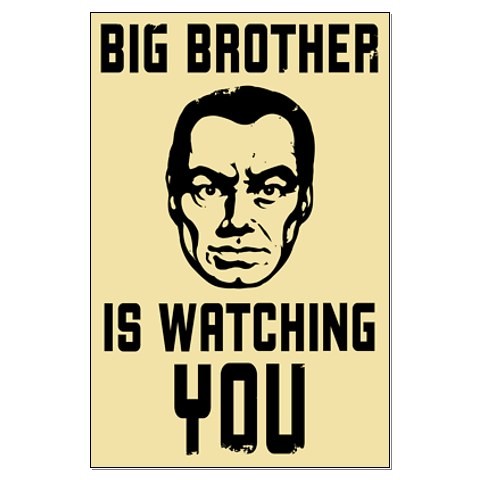
Many theorist have argued that big brother represents Soviet leader Joseph Stalin, whose cult of personality involved ubiquitous portraits and purges of dissenters. Big brother represents Joseph Stalin in his use of fear and adoration to consolidate control, much like Stalin’s regime during the Great Terror. Orwell, having witnessed Stalinist betrayals in Spain, infused this critique with personal venom, showing how such figures dehumanize societies.
Symbolically, big brother is watching embodies omnipresent authority, where the gaze alone deters rebellion. This abstraction allows the Party to adapt, ensuring big brother endures as a tool for psychological domination.
Who Is Winston Smith and His Struggle in the Story?
Winston Smith is the flawed hero, a low-ranking member of the party working at the Ministry of Truth, tasked with altering history.
Winston lives in a cramped apartment, haunted by memories of a freer past, symbolizing the last vestiges of independent thought in a crushed world. His name evokes Winston Churchill and everyman “Smith,” positioning him as a bridge between heroism and ordinariness. Winston’s daily grind involves fabricating lies, which sparks his inner rebellion against the regime’s distortions.
Winston Smith embarks on a dangerous path by keeping a diary, an act of thoughtcrime that defies the regime. His affair with Julia represents a grasp at humanity amid desolation, but their capture exposes the system’s ruthlessness. In the Ministry of Love, Winston endures torture that shatters his resolve, culminating in his betrayal and forced acceptance.
Through Winston, Orwell explores human fragility under pressure, showing how even the defiant can be reprogrammed to love big brother.
How Do Telescreens Enforce Constant Surveillance?
Telescreens are dual-purpose devices: they spew endless propaganda while monitoring citizens, ensuring constant surveillance in public and private spaces. Installed in homes, workplaces, and streets, these screens detect whispers and expressions, turning everyday life into a performance of loyalty.
Posters and telescreens work in tandem, with the former displaying the infamous slogan and the latter enforcing it through interactive commands like exercise routines.
This technology enables the Thought Police to intervene swiftly, creating a panopticon where individuals assume they are always watching. Brother is watching becomes internalized, leading to self-policing that reduces the need for physical enforcers. Orwell illustrates how such tools used to control behavior, stifling creativity and fostering paranoia.
In modern parallels, surveillance cameras echo this, raising questions about privacy in an era of CCTV and facial recognition.
What Historical Events Inspired Orwell’s Vision?
Orwell drew heavily from Bennett’s during World War II, a correspondence school whose paternalistic ads evolved into more authoritative tones, inspiring the big brother from advertising billboards. The company called Educational Services used phrases like “Let me be your father,” which Orwell twisted into a dystopian warning. This commercial influence blended with political realities to form the name of big brother.
His time at the Ministry of Information under Brendan Bracken provided direct insight, as information and from Bracken’s office came directives that echoed the novel’s ministries.
Orwell also resented the wartime propaganda, seeing parallels to Nazi and Soviet methods. The censorship and need to manipulate facts during air raids fueled his critique of how governments need to manipulate information to control the population.
These experiences, combined with Stalin‘s purges, shaped Orwell’s anti-totalitarian stance, making his work a historical mirror.
Is Big Brother Real? Examining the Figure’s Existence
In the novel, big brother‘s reality is ambiguous—perhaps a fabrication, yet treated as divine. This uncertainty amplifies fear, as citizens can’t challenge what might not exist. Big brother is watching you implies an entity beyond mortality, sustained by collective belief and Party machinery.
Orwell uses this to critique leader cults, where figures like Stalin become myths. If big brother represents a construct, it shows power’s reliance on illusion.
The ambiguity forces readers to question authority’s foundations, revealing how regimes thrive on unquestioned narratives.
| Aspect of Big Brother | Description in Novel | Real-World Parallel |
| Omnipresent Image | Posters everywhere with slogan | Dictator portraits in public spaces |
| Leader and Guardian Role | Protector yet punisher | Paternalistic autocrats like Stalin |
| Surveillance Enforcement | Via telescreens | Modern surveillance cameras |
| Symbolic Immortality | Never ages or dies | Eternal leader myths in regimes |
This table highlights how big brother blends fiction with historical tactics.
How Has “Big Brother Is Watching You” Influenced Modern Culture?
The phrase permeated pop culture, inspiring the reality show Big Brother, where contestants are monitored 24/7, ironically turning surveillance into entertainment. Big brother is watching evolved from warning to trope in films like “The Truman Show,” exploring monitored lives.
In literature, it influenced dystopias like “The Hunger Games,” where oversight maintains order. Orwellian became synonymous with deceptive control, used in debates on fake news.
Culturally, it critiques tech giants’ data practices, reminding us that brother is watching in subtle ways.
What Are the Key Themes in Orwell’s Dystopia?
Central themes include truth’s fragility, as the Party rewrites history to suit needs. Dystopian control extends to language via Newspeak, limiting expression to prevent rebellion.
Power’s corruption is evident in the Inner Party’s luxuries amid public squalor, showing inequality’s role in totalitarian systems.
Humanity’s resilience and defeat shine through Winston‘s arc, questioning free will under oppression.
Why Does “Big Brother Is Watching You” Remain Relevant Today?
In an age of digital footprints, big brother is watching you warns of governments and corporations tracking data. Social media algorithms curate realities, echoing doublethink.
Climate of misinformation amplifies Orwell‘s fears, with “alternative facts” blurring lines.
It urges ethical tech use, preventing a slide into omnipresent surveillance.
- Surveillance Risks: Increased monitoring erodes privacy.
- Power Dynamics: Unchecked authority leads to abuse.
- Truth Preservation: Combat propaganda with critical thinking.
How Can We Resist the “Big Brother” Mentality in Society?
Resistance starts with awareness, educating on privacy rights and data laws. Advocate for transparent governance to counter secretive practices.
Support independent media to challenge official narratives, fostering diverse viewpoints.
Personally, use encryption and limit sharing to reclaim control from watchful eyes.
FAQs About Big Brother Is Watching You
What is the origin of “big brother is watching you”?
The phrase comes from George Orwell’s Nineteen Eighty-Four, published in 1949, symbolizing surveillance in a totalitarian society inspired by World War II propaganda and dictatorships, warning against loss of privacy.
Who does big brother represent in the novel?
Big brother represents an all-powerful leader figure, often linked to Joseph Stalin, embodying the Party’s control through fear, loyalty, and omnipresent propaganda in Oceania‘s oppressive regime.
What role do telescreens play in the story?
Telescreens enforce constant surveillance, broadcasting news while monitoring citizens, preventing privacy and ensuring conformity, illustrating Orwell‘s critique of technology as a tool for domination.
How did World War II influence Orwell’s writing?
Orwell‘s BBC work exposed him to censorship and need to manipulate information, reshaping his views on propaganda, directly inspiring the ministries and surveillance themes in his dystopia.
Is Nineteen Eighty-Four based on real events?
Yes, it draws from Stalin‘s purges, Nazi propaganda, and wartime censorship, blending Orwell‘s experiences to create a cautionary tale about totalitarian rises and societal control.
What happens to Winston Smith in the end?
Winston Smith is tortured in the Ministry of Love, betraying his love and embracing the Party, concluding with him internalizing love big brother, showing total psychological defeat.
How does the phrase apply to modern surveillance?
Today, big brother is watching you relates to surveillance cameras, data tracking by tech firms, and government monitoring, highlighting ongoing threats to erosion of personal freedoms in digital eras.
Conclusion on Big Brother Is Watching You
In reflecting on big brother is watching you, George Orwell‘s profound legacy emerges as a beacon against the shadows of authoritarianism and unchecked monitoring.
Through Nineteen Eighty-Four, Orwell masterfully weaves a narrative that dissects the mechanics of power, from linguistic manipulation to psychological warfare, revealing how societies can devolve into dystopias where truth is the first casualty.
The novel’s chilling portrayal of Oceania, with its endless wars and vigilant telescreens, serves not merely as fiction but as a mirror to historical atrocities and contemporary challenges. Orwell‘s insights, born from his encounters with censorship and need to manipulate during turbulent times, underscore the vulnerability of human rights in the face of totalitarian ambitions.
