

Connotation examples reveal how words carry hidden layers of meaning that shape our perceptions far beyond their basic definitions. In linguistics, connotation refers to the emotional or cultural associations tied to a word, distinct from its literal meaning. For instance, the word “slim” often evokes a positive connotation of attractiveness, while “skinny” might suggest frailty with a negative connotation, even though both denote thinness.
This nuance affects communication in advertising, literature, and daily interactions, where choosing the right words can inspire trust or provoke disdain. With over 80% of human communication being nonverbal or implied, understanding connotation examples empowers clearer, more persuasive messaging. Historically, rhetoricians like Aristotle highlighted these subtleties in persuasion, proving their timeless value.
What Does Connotation Mean?
Connotation mean the additional meaning or emotional undertone that a word carries beyond its literal definition. It’s the implied meaning of a word, influenced by societal norms, personal experiences, and cultural contexts. For example, “dove” doesn’t just mean a bird; it connotes peace and purity due to symbolic references in history and religion. This layer of meaning makes language dynamic, allowing speakers to convey attitudes without explicit statements.
In practice, connotation helps differentiate synonyms that share a denotation but evoke different feelings. Think of connotation as the flavor added to a plain ingredient—the basic definition is neutral, but the connotation can make it sweet or bitter. Writers and marketers leverage this to evoke specific emotions, turning simple sentences into powerful tools for engagement.
Connotation Definition and Key Concepts
The definition of connotation is the suggested by a word or the feeling or idea it invokes apart from its explicit meaning. Connotation refers to associations that go beyond its literal meaning, often subjective and varying by audience. Synonyms for connotation include undertone, implication, and overtone, emphasizing its role in adding depth.
Understanding the connotation definition is essential for effective word choice. For instance, “economical” has a positive connotation implying smart resource use, while “cheap” carries a negative connotation suggesting low quality. This distinction highlights how connotation influences interpretation in professional settings like business emails or speeches.
Difference Between Connotation and Denotation
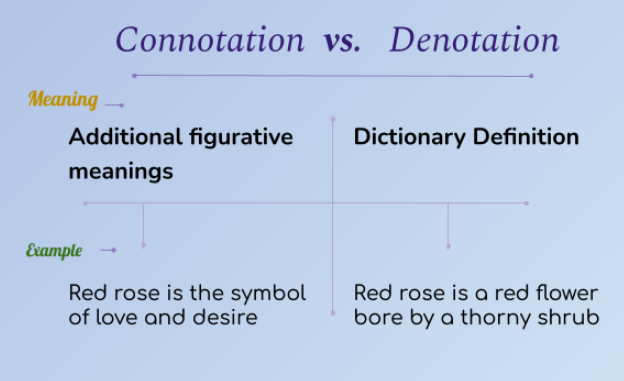
The difference between connotation and denotation lies in subjectivity versus objectivity. Denotation is the word’s literal meaning or dictionary definition, fixed and factual. Connotation and denotation contrast sharply: while denotation refers to a word’s direct reference, connotation adds the implied meaning shaped by context.
Connotation vs denotation examples clarify this: “house” denotes a building (denotative), but “home” connotes warmth and belonging (connotative). Ignoring this gap can lead to miscommunication, as words with the same denotation but different connotation alter tone entirely.
In analysis, connotation vs its counterpart shows how language evolves. A word like “awesome” once denoted awe-inspiring fear but now has a positive connotation of excellence, demonstrating cultural shifts.
Types of Connotations
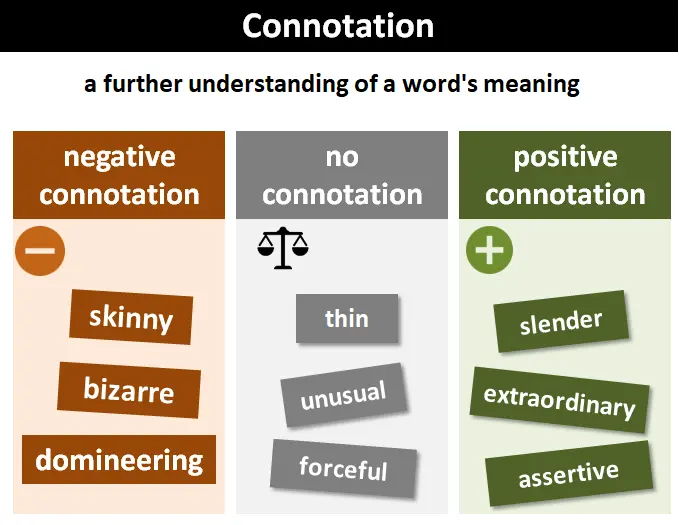
Types of connotations categorize the emotional tones words evoke, including positive and negative, as well as neutral. Different types of connotation depend on the associations, helping communicators tailor messages. For example, positive associations uplift, while negative emotions warn or criticize.
Exploring types of connotations reveals their flexibility. Words can shift types over time; “sick” used to be purely negative but now connotes coolness in slang. This adaptability makes connotation a versatile tool in evolving languages.
What Is a Positive Connotation?
A positive connotation infuses words with favorable vibes, making them appealing and motivational. Words like “youthful” connote vitality and freshness, evoking admiration. Positive connotation enhances persuasion, as seen in branding where “innovative” suggests creativity and progress.
In usage, positive connotation builds rapport. Consider “slender” versus “gaunt”—the former connotes elegance, the latter weakness. Choosing such words strategically can transform neutral statements into inspiring ones, fostering positive responses.
Positive and negative connotations often pair in contrasts, but focusing on positives amplifies encouragement. This approach is common in self-help literature, where connotative words like “empower” drive motivation.
Exploring Negative Connotation
Negative connotation attaches unfavorable implications, stirring discomfort or judgment. Words such as “stubborn” connote inflexibility, implying resistance that’s unhelpful. Negative connotation is powerful in critiques, highlighting flaws without direct accusation.
Common connotation examples of negativity include “arrogant,” which connotes overconfidence bordering on rudeness. Writers use connotation here to build tension, as in thrillers where “shadowy” evokes suspicion. Recognizing negative connotation helps avoid unintended offense in sensitive discussions.
Balancing negative connotation with positives prevents overly harsh tones. For instance, “critical” can connote fault-finding negatively, but reframed as “analytical,” it shifts to constructive.
Understanding Neutral Connotation
Neutral connotation lacks strong emotional pull, remaining factual and unbiased. Words like “average” connote typicality without judgment, being neither positive nor negative. Neutral connotation suits technical writing, ensuring clarity without bias.
In contexts, neutral connotation provides balance. “Chair” denotes a seat with no added feeling or idea, unlike “throne,” which connotes power. This type maintains objectivity in reports or instructions.
While less exciting, neutral connotation is vital for precision. It avoids swaying opinions, making it ideal for legal or scientific texts where emotions could distort facts.
Connotation Examples in Everyday Language
Connotation examples abound in daily talk, showing how subtle shifts influence meaning. For examples of connotation, “bargain” connotes a smart deal positively, while “steal” might imply unethical gain negatively. These illustrate word choice‘s impact on perception.

Everyday connotation examples include food descriptions: “plump” connotes juiciness in fruits but overweight in people. Such variations highlight how context shapes connotation, affecting social interactions.
Incorporating connotation examples refines communication. “Ambitious” can connote drive positively or ruthlessness negatively, depending on tone, emphasizing mindful usage.
How Does Connotation Work in Sentences?
Connotation in sentences adds nuance, transforming plain statements. For connotation in sentences, “She whispered secrets” connotes intimacy, while “She muttered complaints” suggests annoyance. This use of connotation crafts vivid narratives.
Detailed connotation in sentences examples show layering: “The eagle soared” connotes freedom, evoking inspiration. Sentences leverage connotation to imply without stating, enhancing engagement.
Effective connotation in sentences relies on audience awareness. A sentence like “He’s a shark in business” uses metaphor to connote ruthlessness, blending figurative elements for impact.
Connotation in Literature and Its Power
Connotation in literature enriches storytelling, allowing authors to imply themes subtly. In classics, connotation in literature builds atmosphere; “stormy” connotes turmoil beyond weather. Writers use the word choices to deepen reader immersion.
Famous connotation in literature includes Hawthorne’s “scarlet” in “The Scarlet Letter,” connoting sin and passion. This symbolic meaning adds complexity, making texts timeless.
Writers may use connotation for irony or foreshadowing. In poetry, words like “rose” connote love, layering romance without direct explanation.
Connotative Words and Their Effects
Connotative words carry emotional weight, distinguishing them from purely denotative terms. Connotative words like “whisper” connote secrecy, adding intrigue. Their effects shape tone, making writing memorable.
Selecting connotative words involves considering emotional associations. “Fragrance” connotes pleasantness, unlike “stench,” which evokes disgust. This choice influences reader emotions profoundly.
Connotative language varies by culture; what connotes positivity in one may differ elsewhere. Awareness ensures inclusive communication.
How to Choose Words with the Right Connotation?
To choose words effectively, evaluate their connotation against intent. Choose words like “persistent” for positivity over “obstinate” for negativity. This refines messaging.
Practical tips: List synonyms and assess word’s connotation. For example, “unique” connotes originality positively, aiding creative expression.
Word choice pitfalls include overlooking shifts; “cool” connotes composure or trendiness, requiring context checks.
Connotation Examples Through Comparisons
Connotation examples shine in contrasts, revealing subtleties. A synonym pair like “laugh” (joyful) and “cackle” (sinister) shows different connotation.
Visualizing connotation examples: “Sunrise” connotes hope, “dawn” neutrality. Comparisons highlight nuance.
| Word | Denotation | Positive Connotation | Negative Connotation | Neutral Connotation |
| Thin | Slim build | Slender (elegant) | Skinny (frail) | Lean (factual) |
| Old | Aged | Vintage (classic) | Antique (outdated) | Elderly (objective) |
| Talk | Speak | Chat (friendly) | Gossip (malicious) | Converse (balanced) |
| Look | Gaze | Admire (appreciative) | Stare (intrusive) | Observe (impartial) |
This table summarizes connotation examples, aiding quick reference.
Advanced Figurative Uses in Connotation Examples
Figurative applications elevate connotation examples. In metaphor, “lionhearted” connotes bravery beyond literal. Figurative meaning amplifies expression.
Simile enhances: “As cunning as a fox” connotes cleverness slyly. These devices layer meaning beyond the literal.
Beyond their literal, words in simile or metaphor evoke imagery, enriching narratives.
- Connotation examples highlight emotional layers, distinguishing synonyms like “brave” (positive) from “reckless” (negative).
- Understanding denotation versus connotation ensures precise communication, avoiding unintended tones.
- Types of connotations—positive, negative, neutral—guide effective word choice in various contexts.
- Literature leverages connotation for symbolism, as in metaphors evoking deeper themes.
- Practical application of connotative words enhances persuasion, making messages memorable and influential.
FAQs About Connotation Examples
What are some common connotation examples?
Connotation examples include “home” connoting comfort versus “house” as neutral structure, or “youthful” suggesting energy positively while “childish” implies immaturity negatively, demonstrating emotional layers in word use.
How does negative connotation differ from positive?
Negative connotation evokes unfavorable feelings like disdain in “manipulative,” whereas positive connotation inspires admiration, such as “strategic,” both sharing manipulation’s denotation but differing in emotional impact.
What is the role of denotation in understanding connotation?
Denotation provides the word’s literal meaning, serving as a foundation; connotation builds upon it with implied emotions, ensuring clear differentiation for nuanced communication.
Can words have neutral connotation?
Yes, neutral connotation exists in terms like “data,” which lacks emotional charge, focusing solely on facts without positive or negative bias, ideal for objective contexts.
How is connotation used in literature?
Connotation in literature allows authors to imply themes subtly; for example, “darkness” often connotes evil or mystery, enhancing atmosphere without direct explanation.
What makes connotative words powerful?
Connotative words derive power from emotional associations, enabling persuasion; “empower” connotes strength positively, influencing reader mindset more than neutral synonyms.
Why consider connotation in word choice?
Considering connotation in word choice prevents misinterpretation; words like “assertive” connote confidence positively, while “aggressive” suggests hostility, tailoring messages effectively.
Conclusion on Connotation Examples
Connotation examples illustrate the profound influence of hidden meanings in language, transforming simple words into tools of emotion and persuasion. From distinguishing positive connotation in uplifting terms to recognizing negative connotation in cautionary ones, this exploration underscores how connotation goes beyond its literal to shape interactions.
By mastering types of connotations, including neutral and figurative, communicators can harness nuance for clarity and impact. Whether in sentences, literature, or daily use, connotation examples reveal language’s artistry, encouraging thoughtful word choice to evoke specific emotions. Ultimately, embracing these subtleties elevates expression, fostering deeper connections in an increasingly nuanced world.
