

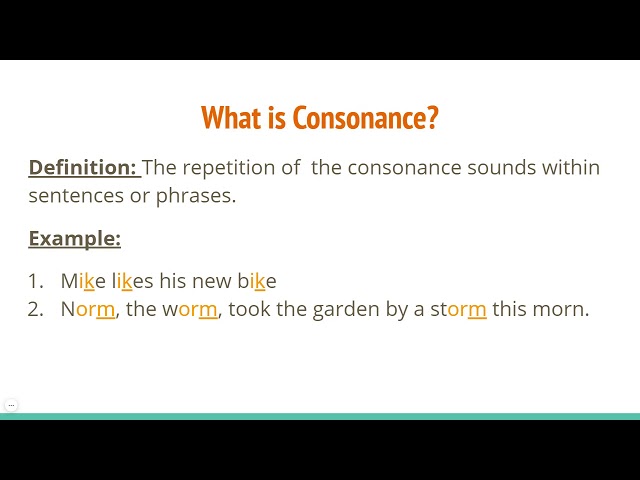
Consonance literary definition describes consonance as a literary device involving the repetition of consonant sounds to create rhythm and musicality in writing.
This figure of speech, often confused with alliteration or assonance, enhances the auditory experience of a poem or prose by repeating consonant sounds, such as in the famous example “peck of pickled peppers.” In English literature, poets like Edgar Allan Poe use consonance to add rhythm, making texts memorable and emotionally resonant.
What is the Consonance Literary Definition?
Defining Consonance
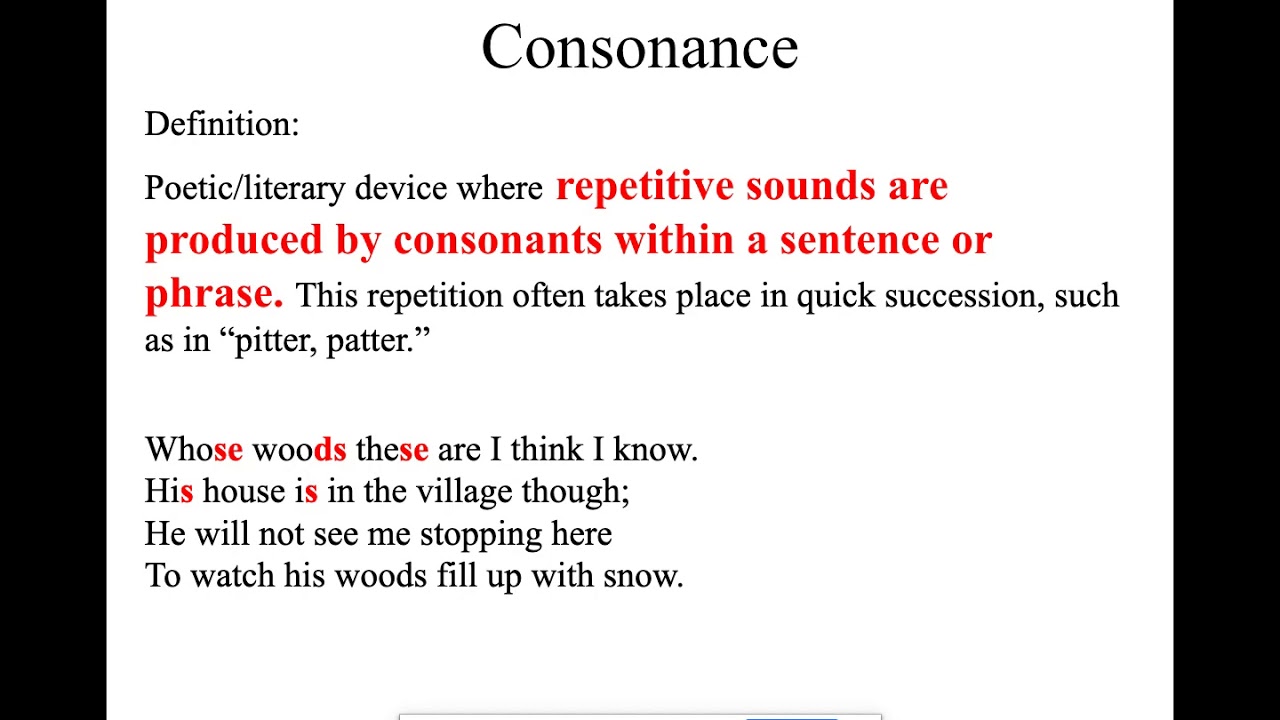
The consonance literary definition explains consonance as the repetition of consonant sounds within or at the end of words in a phrase or sentence. Unlike alliteration, where the repeated consonant sound is typically repeated at the beginning of words, consonance can occur anywhere—at the start, middle, or end.
For example, “The ship sailed smoothly” showcases sibilance, a subtype of consonance, where the “s” sound is repeated to create a musical quality. This literary device is distinct for its ability to add rhythm without relying on rhyme or vowel sounds.
The definition of consonance emphasizes its role in enhancing the auditory texture of writing. It’s a common literary tool that poets and writers use to make their work more engaging. By focusing on consonant sounds, consonance creates a subtle repetition of sounds that can evoke specific moods, from calm to suspenseful, depending on the consonant chosen.
Types of Consonance
Consonance includes two main forms: alliterative consonance and non-alliterative consonance. Alliterative consonance involves repetition of the same consonant at the beginning of the word, as in “sally sang softly.” Non-alliterative consonance, however, places the repeated consonant elsewhere, like in “black backpack,” where the “k” sound is repeated within the words. Both types of consonance contribute to the rhythm and musicality of a poem or prose, offering writers versatile tools to craft their literary devices.
Consonance vs. Assonance and Alliteration
Consonance vs. Alliteration
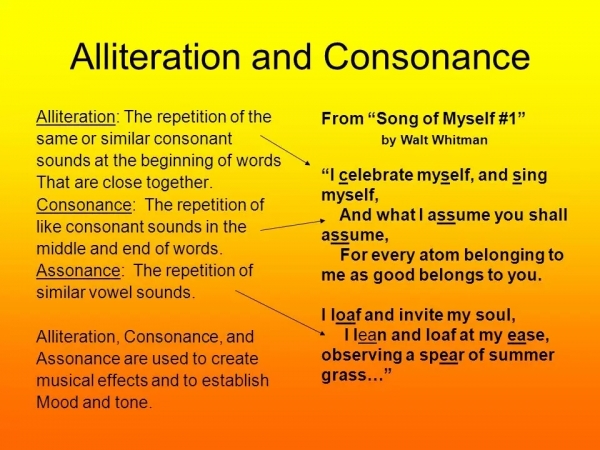
The difference between consonance and alliteration lies in the placement of the repeated consonant sound. Alliteration specifically refers to the repetition of consonant sounds at the beginning of the word, such as in the example of alliteration “peter piper picked a peck of pickled peppers.” Consonance, however, is broader, allowing the consonant sound to appear anywhere, as in “blank tank” where the “nk” sound is repeated at the end of words. This flexibility makes consonance a more versatile literary device.
While alliteration is a form of consonance, not all consonance is alliterative. Writers use consonance to create subtle effects, whereas alliteration is often more noticeable, drawing attention to the repeated sound at the start of words. Both literary devices enhance the musicality of a poem, but consonance offers greater freedom in repetition of sounds.
Consonance vs. Assonance
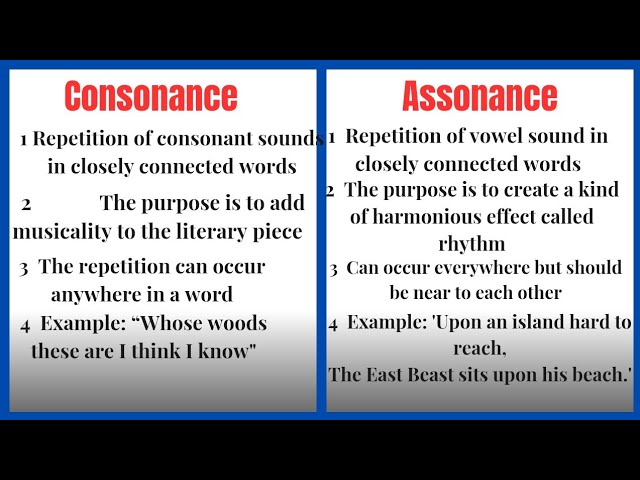
Assonance and consonance are often confused, but they target different sounds. Assonance is the repetition of vowel sounds, as in “mad hat” where the “a” vowel sound is repeated. Consonance, in contrast, focuses on consonant sounds, like “stop drop” with the “p” sound. Here’s a comparison:
| Literary Device | Sound Type | Example | Effect |
| Consonance | Consonant sound | “Blank tank” | Subtle rhythm and musicality |
| Assonance | Vowel sound | “Mad hat” | Smooth, melodic flow |
| Alliteration | Consonant at start | “Sally sang” | Bold, attention-grabbing rhythm |
Consonance and assonance work together in poetry to create similar sounds, but consonance is the repetition of consonants, making it distinct in its auditory impact.
Why Consonance is Important in Writing
Adding Rhythm and Musicality
Consonance adds a musical quality to writing by creating rhythm and musicality through repetition of consonant sounds. For example, in “The raven roamed restlessly,” the “r” consonant sound builds a rolling rhythm that enhances the poem’s mood. This repetition makes the text more memorable, engaging the reader’s ear and reinforcing the literary device’s power.
Writers use consonance to make their work flow naturally, avoiding the need for heavy rhyme. By strategically placing consonant sounds within a group of words, consonance can make a sentence feel cohesive, as in “soft sighs sooth” where sibilance creates a calming effect. This musicality is key in poetry and prose, enhancing the auditory experience.
Enhancing Emotional Impact
Consonance is a literary device that can evoke specific emotions. For instance, sibilance with “s” or “sh” sounds, like “serpent slithered silently,” can create a sense of suspense or mystery. Poets like Edgar Allan Poe masterfully use consonance in works like “The Raven,” where consonance in the words like “nevermore” and “nothing” amplifies the somber tone. This repetition of sounds adds depth, making consonance a powerful tool for emotional resonance.
Examples of Consonance in Literature
Famous Examples of Consonance
Consonance in literature is evident in many famous examples. One classic example of consonance is the tongue-twister “Peter Piper picked a peck of pickled peppers,” where the “p” consonant sound is both alliterative and consonant, creating a lively rhythm. In Edgar Allan Poe’s “The Raven,” the repetition of consonant sounds like “nevermore” and “nothing” reinforces the poem’s haunting atmosphere, showcasing consonance’s emotional power.
Another consonance example is found in Shakespeare’s “Macbeth,” where “dark deeds done” uses the “d” sound to emphasize treachery. These consonance examples highlight how poets use consonance to create a musical quality, making their poems memorable and impactful.
Consonance in Modern Writing
Modern writers use consonance in both poetry and prose to enhance rhythm. For example, in contemporary poetry, lines like “thick thorns tangle” use consonance to evoke vivid imagery. In prose, consonance appears in descriptive passages, such as “crisp crust crumbles,” where the “cr” sound mimics the texture of breaking bread. These examples show how consonance is used to engage readers with similar sounds.
How to Use Consonance in Your Writing
Crafting Consonance for Effect
To use consonance effectively, writers should focus on repetition of consonant sounds within a group of words to create a musical quality. Here are tips to use consonance to make your writing stand out:
- Choose a consonant that matches the mood, like “s” for softness or “k” for sharpness.
- Place the repeated sound strategically, either within or at the end of words.
- Combine with other literary devices like assonance for a layered effect.
For example, “blank books burst” uses consonance to create a sharp, energetic rhythm. Practice reading aloud to ensure the sound is repeated naturally, enhancing the auditory experience.
Common Mistakes to Avoid
Overusing consonance can make writing feel forced or distracting. For example, “Sally sang soft songs silently” may sound excessive, reducing readability. Another mistake is neglecting context—consonance should enhance meaning, not overshadow it. Writers should balance repetition with clarity, ensuring consonance adds to the musicality without overwhelming the reader.
The Role of Consonance in Poetry and Prose
Consonance in Poetry
Consonance is one of the common literary devices poets use to create rhythm and musicality. In poetry, consonance often complements rhyme, as in “The light lingers long,” where the “l” consonant sound softens the tone. Edgar Allan Poe’s “The Bells” uses consonance with “tinkling tones” to mimic bell sounds, showing how consonance can also evoke imagery. This repetition of similar sounds makes poems more memorable and engaging.
Consonance is important in poetry because it allows poets to craft a type of sound that resonates with readers. By repeating consonant sounds, poets can emphasize key themes or emotions, making consonance a versatile literary device for creating auditory effects.
Consonance in Prose
In prose, consonance is subtler but equally effective. Writers use consonance in descriptive passages to enhance rhythm, as in “The craggy crest crumbled,” where the “cr” sound mimics rugged terrain. Consonance can also unify a sentence, making it flow smoothly without relying on rhyme. For example, “misty mountains murmur” creates a cohesive, musical quality that enhances the narrative’s atmosphere.
FAQs About Consonance
What is the consonance literary definition?
Consonance is a literary device involving the repetition of consonant sounds within or at the end of words, adding rhythm and musicality to poetry or prose.
How does consonance differ from alliteration?
Consonance involves consonant sounds anywhere in words, while alliteration repeats them at the beginning of the word, like “peter piper.”
What is an example of consonance in poetry?
In “The Raven,” Edgar Allan Poe uses “nevermore” and “nothing” to repeat the “n” sound, creating a somber rhythm.
How does assonance and consonance differ?
Assonance repeats vowel sounds, like “mad hat,” while consonance repeats consonant sounds, like “blank tank.”
Why do poets use consonance?
Poets use consonance to add rhythm and musicality, making poems more engaging and emotionally resonant through repeated sounds.
Can consonance be used in prose?
Yes, consonance enhances prose by adding rhythm, as in “crisp crust crumbles,” creating a vivid auditory effect.
What is sibilance in consonance?
Sibilance is a subtype of consonance using “s” or “sh” sounds, like “serpent slithered,” to create a soft or hissing rhythm.
Conclusion on Consonance Literary Definition
The consonance literary definition highlights its role as a literary device that repeats consonant sounds to create rhythm and musicality in poetry and prose. From Edgar Allan Poe’s haunting consonance in literature to modern writers using sibilance for effect, consonance remains a vital tool for crafting memorable writing.
Its versatility, whether in alliterative or non-alliterative forms, allows poets and writers to enhance the auditory experience, making consonance is one of the most enduring literary devices. By experimenting with consonance, writers can add rhythm and depth, transforming their work into a musical masterpiece.
- Key Takeaways:
- Consonance literary definition involves repetition of consonant sounds for rhythm and musicality.
- Consonance differs from alliteration (start of words) and assonance (vowel sounds).
- Famous examples like “peck of pickled peppers” show consonance’s impact.
- Writers use consonance to create musical quality and evoke emotions.
- Consonance can make writing memorable by strategically repeating consonant sounds.
