



Do sound waves travel slower through less elastic materials? The answer lies in how sound propagates through different substances and the role elasticity plays in this process. Sound travels by causing particles in a medium—such as solids, liquids, or gases—to vibrate.
These vibrations move from particle to particle, creating a wave that our ears perceive as sound. The speed at which sound waves travel depends heavily on the properties of the medium, especially its elasticity and density.
Elasticity refers to a material’s ability to return to its original shape after being stretched or compressed. When a material is highly elastic, its particles can quickly bounce back to their initial positions after being disturbed.
This quick recovery allows sound waves to travel faster because the particles efficiently transfer the vibration energy along the medium. On the other hand, less elastic materials resist returning to their original form quickly, causing the energy transfer to slow down and, consequently, the sound waves to travel slower.
For example, sound travels faster in steel than in rubber because steel is much more elastic. Similarly, sound moves slower through liquids and even slower through gases, as these states of matter tend to be less elastic and have particles more spread out compared to solids.
However, elasticity is not the only factor affecting sound speed. Density also plays a role—denser materials can slow down sound waves despite their elasticity, because particles are heavier and more difficult to move. Temperature and pressure can also impact sound speed, especially in gases.
In conclusion, yes, sound waves generally travel slower through less elastic materials due to the decreased ability of particles to quickly restore their positions and transfer vibration energy efficiently.
What Is Elasticity in Materials?
Elasticity is a fundamental physical property of materials that describes their ability to return to their original shape and size after being deformed by an external force.
When a material is stretched, compressed, or bent, its particles are temporarily displaced from their normal positions. An elastic material resists this deformation and, once the force is removed, its particles quickly snap back to their initial arrangement.
In simple terms, elasticity measures how “springy” or flexible a material is. Materials with high elasticity, like rubber or steel, can undergo significant deformation but still return to their original shape without permanent damage.
Conversely, materials with low elasticity may deform permanently or take longer to recover, such as clay or soft plastics.
Elasticity is crucial for understanding how sound waves travel through different materials. Since sound waves rely on the vibration and movement of particles, a material’s elasticity determines how efficiently those vibrations pass from one particle to another.
Highly elastic materials facilitate faster and clearer sound transmission, while less elastic materials slow down the wave’s progress.
Elasticity is typically quantified by a value called the elastic modulus or Young’s modulus, which measures the stiffness of a material. The higher the elastic modulus, the more resistant the material is to deformation and the better it is at quickly restoring its shape.
In summary, elasticity is a key property that influences not only the mechanical behavior of materials but also how sound waves travel through them, affecting speed and clarity.
How Sound Waves Travel Through Different Materials


Sound waves are vibrations that move through a medium by causing particles to oscillate. These vibrations travel as mechanical waves, which means they need a material to carry them — unlike light, sound can’t travel through a vacuum. The way sound waves travel, including their speed and clarity, depends heavily on the material they move through.
Materials differ in two key properties that affect sound transmission: density and elasticity. Density is how tightly packed the particles are, while elasticity is how easily a material returns to its original shape after being disturbed. Generally, sound travels fastest in materials that are highly elastic and have closely packed particles.
Solids, such as metal and wood, have particles arranged tightly and exhibit high elasticity. This allows sound waves to transfer energy quickly from one particle to the next, making sound travel fastest through solids. For example, sound moves through steel at about 5,960 meters per second, much faster than in air.
Liquids have particles that are less tightly packed than solids but more than gases. Water, a common liquid medium, transmits sound at roughly 1,480 meters per second, slower than solids but faster than gases. The increased particle spacing compared to solids means sound takes a bit longer to propagate.
Gases, like the air around us, have particles spaced far apart with lower elasticity, so sound waves move slower here—around 343 meters per second at room temperature. The particles collide less frequently, which reduces the speed of sound.
Besides speed, materials also affect sound quality. Softer, less elastic materials tend to absorb sound, causing it to fade quickly. Hard, dense materials often reflect sound, creating echoes or reverberation.
In summary, sound waves travel differently through solids, liquids, and gases due to variations in density and elasticity. Understanding these differences helps explain everything from why you hear your voice differently underwater to how buildings are designed to manage noise.
The Relationship Between Elasticity and Sound Speed
Elasticity plays a vital role in determining how fast sound waves travel through a material. In simple terms, elasticity is a material’s ability to return to its original shape after being stretched or compressed.
The more elastic a material is, the better it can transmit vibrations—meaning sound waves move faster through it.
Sound waves are mechanical waves, so they rely on the vibration of particles to move through a medium. When a sound wave hits a particle in a material, it pushes or pulls on it, causing it to bump into neighboring particles.
If the material is highly elastic, its particles spring back quickly and pass the energy along more efficiently. This quick transfer of energy increases the speed of the sound wave.
For example, steel is extremely elastic compared to air or water. Because of this, sound travels through steel much faster than it does through less elastic substances like rubber or gas. Even though rubber might be dense, its low elasticity causes sound to move through it more slowly.
It’s important to understand that elasticity and density work together. While high elasticity speeds up sound, higher density can slow it down. The key is the balance: materials that are both elastic and not too dense allow sound to travel fastest.
In short, the greater a material’s elasticity, the faster sound can travel through it. This is why sound moves quickly through solid metals and more slowly through soft or loose materials.
Comparing Sound Speeds in Elastic vs. Less Elastic Materials
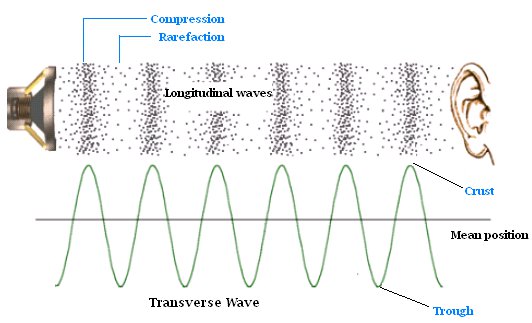

The speed of sound depends heavily on how elastic a material is. Elasticity determines how quickly particles in a material return to their original position after being disturbed by a vibration.
The more elastic the material, the faster it can transfer the energy of a sound wave — resulting in quicker sound transmission.
In highly elastic materials like metals (e.g., steel or aluminum), particles are tightly bonded and snap back quickly when displaced.
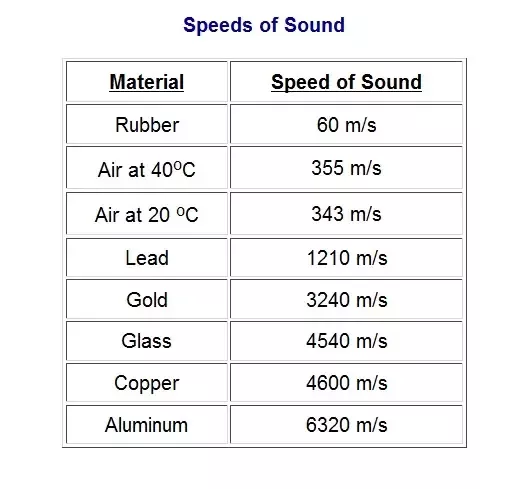
This rapid recovery allows vibrations to pass smoothly from one particle to the next. As a result, sound travels extremely fast in these materials — in steel, for example, sound can travel at nearly 5,960 meters per second.
In contrast, less elastic materials, such as rubber or soft plastics, absorb more of the energy from the sound wave instead of efficiently transferring it. Their particles respond more slowly and do not rebound as effectively.
This lag slows the rate at which sound moves through them. In rubber, for instance, sound speed is significantly lower than in metals or even liquids.
Gases, like air, are also less elastic compared to most solids and liquids. That’s why sound moves relatively slowly through air — around 343 meters per second at room temperature.
In summary, sound travels faster in elastic materials because the particles can respond and return to their original positions rapidly.
In less elastic materials, that responsiveness is dampened, causing slower sound propagation. Comparing the two types clearly shows how elasticity is a key factor in the speed at which sound waves move through different substances.
Factors That Influence Sound Wave Speed Besides Elasticity
While elasticity is a major factor affecting the speed of sound, it’s not the only one. Several other physical properties of a material influence how quickly sound waves can travel through it. Understanding these factors helps explain why sound behaves differently in various substances.
- Density
Density refers to how tightly packed the particles in a material are. Generally, the more massive the particles, the harder it is for them to vibrate quickly. This can slow down the sound wave, even in materials with high elasticity. For example, although lead is a solid, its high density makes sound travel slower through it than in less dense but more elastic materials like aluminum. - Temperature
In gases especially, temperature has a big impact on sound speed. Warmer air causes molecules to move more quickly, making it easier for vibrations to pass through. That’s why sound travels faster on a hot day than on a cold one. - State of Matter
Sound travels fastest in solids, slower in liquids, and slowest in gases. This is because particles in solids are tightly packed and can transmit vibrations more effectively. Gases, on the other hand, have particles that are far apart, which makes energy transfer less efficient. - Humidity (for air)
Moist air is less dense than dry air, so sound actually travels faster in humid conditions. Water vapor is lighter than nitrogen and oxygen, which helps sound waves move more quickly. - Pressure (in gases)
Under constant temperature, increasing air pressure doesn’t significantly affect sound speed. However, at varying temperatures or in enclosed systems, pressure changes can slightly alter sound velocity.
Why Elasticity Is Key to Efficient Sound Transmission

Elasticity plays a central role in how efficiently sound travels through a material. In physics, elasticity refers to a material’s ability to return to its original shape after being deformed. When sound waves move through a substance, they cause its particles to vibrate.
The more elastic the material, the quicker and more effectively these vibrations are passed along to neighboring particles—resulting in faster and clearer sound transmission.
Materials like steel and glass, which have high elasticity, allow sound to move through them rapidly and with little energy loss. This is because their atomic structure resists deformation and quickly bounces back, allowing the wave to maintain its speed and strength.
That’s why sound travels much faster in solids than in liquids or gases—solids are generally more elastic and tightly packed, offering less resistance to wave movement.
In contrast, less elastic materials absorb more of the sound energy as their particles deform and take longer to return to their original state. This slows down the wave and reduces how far and how clearly it travels. For example, rubber, which is flexible but not very elastic in a mechanical sense, transmits sound poorly.
Ultimately, the greater the elasticity, the more efficiently a material can transmit sound. This principle is fundamental in designing buildings, audio equipment, and even musical instruments, where material choice affects how sound is amplified or dampened.
Whether it’s tuning a violin or engineering a concert hall, understanding elasticity is key to mastering sound transmission.
Conclusion
In summary, the elasticity of a material plays a major role in how efficiently sound waves travel through it. Elastic materials can quickly return to their original shape after being compressed or stretched by a sound wave.
This rapid response allows the wave to move more quickly and with less energy loss, resulting in faster sound transmission. That’s why solids like steel or glass—known for their high elasticity—allow sound to travel much faster than in liquids or gases.
On the other hand, materials with low elasticity, such as rubber or soft plastics, tend to absorb more of the wave’s energy. This slows down the wave and weakens the sound as it travels. While elasticity is critical, it’s not the only factor.
Density, temperature, and internal structure of the material also impact sound speed, but elasticity directly affects how well vibrations can be passed from one particle to another.
Understanding this relationship is useful in real-world applications—from building better concert halls and soundproof rooms to designing clearer communication systems.
In all cases, materials with high elasticity help ensure sound travels efficiently and with high quality, making elasticity a key principle in both science and engineering related to acoustics.


