



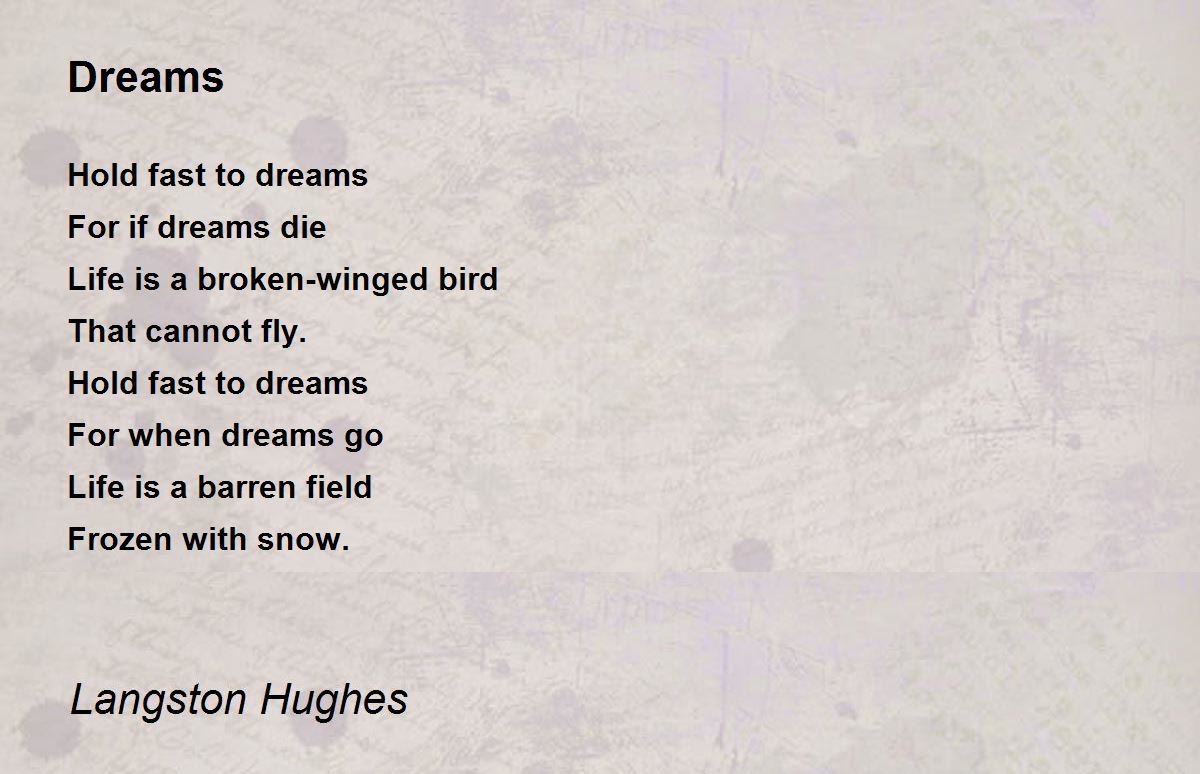
Dreams by Langston Hughes stands as a timeless masterpiece in American literature, capturing the essence of human ambition through just eight lines of profound poetry. Published in 1926 during the Harlem Renaissance, this poem by the renowned poet Langston Hughes urges readers to hold fast to dreams, emphasizing how vital they are to a fulfilling life.
With vivid metaphors like a broken-winged bird that cannot fly and a barren field frozen with snow, Hughes illustrates the desolation of a life without dreams. Drawing from his experiences as a Black artist in a segregated society, the work resonates with themes of hope, perseverance, and racial equality, influencing generations of readers and writers alike.
Who Was Langston Hughes and Why Does His Poetry Matter?
Langston Hughes, born on February 1, 1902, in Joplin, Missouri, emerged as one of the most influential figures in 20th-century American poetry. Raised in a turbulent era marked by racial discrimination, he moved frequently during childhood, living in Kansas, Illinois, and Ohio before settling in Harlem, New York.

This vibrant neighborhood became the epicenter of the Harlem Renaissance, a cultural explosion from the 1920s to the 1930s where Black artists, musicians, and writers celebrated their heritage and challenged societal norms. Hughes’ works, including dreams by langston hughes, often reflected the struggles and aspirations of African Americans, blending jazz rhythms with everyday language to make poetry accessible and impactful.
His literary career spanned decades, producing over 60 books, including poetry collections, novels, plays, and essays. Hughes’ style was revolutionary; he incorporated elements of blues and jazz, creating a rhythmic flow that mirrored spoken word. In dreams by langston hughes, this is evident in the repetitive structure that echoes like a song.
Beyond writing, Hughes traveled extensively—to Europe, Africa, and the Soviet Union—which broadened his perspective on global racial issues. He died on May 22, 1967, but his legacy endures, with schools, libraries, and awards named in his honor, underscoring why his poetry continues to inspire discussions on identity and ambition.
Hughes’ place in poetry is cemented by his role among Harlem Renaissance writers, where he collaborated with figures like Zora Neale Hurston and Claude McKay.
His works addressed the Black experience without apology, using dreams by langston hughes to symbolize broader fights for civil rights. Today, educators teach his poems in classrooms worldwide, highlighting their relevance to modern issues like inequality and mental health.
What Is the Full Text of Dreams by Langston Hughes?
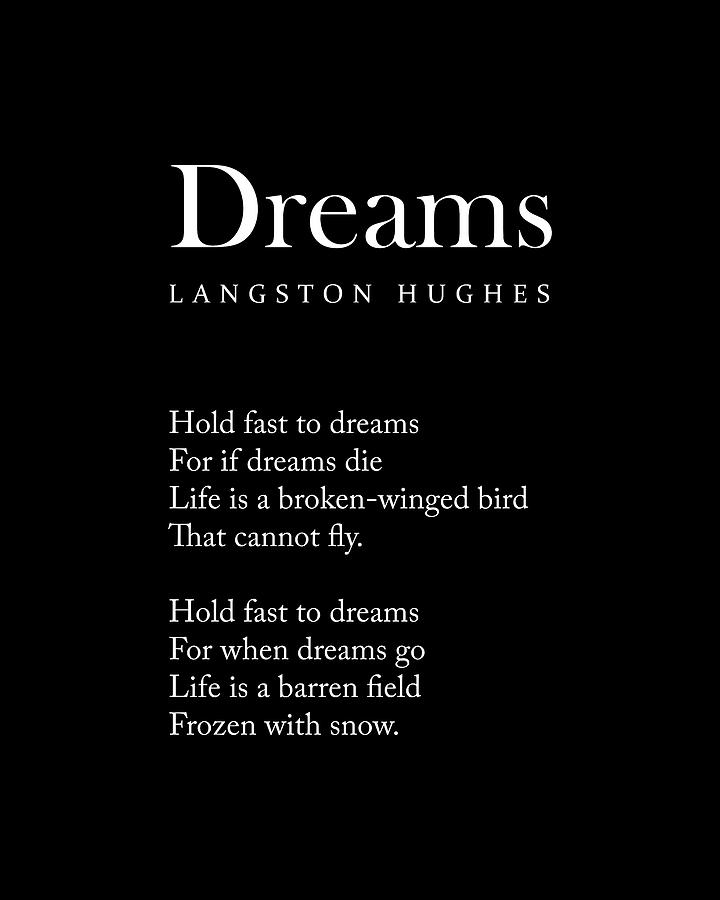
To truly grasp dreams by langston hughes, one must read the poem in its entirety. Here is the full text:
Hold fast to dreams
For if dreams die
Life is a broken-winged bird
That cannot fly.
Hold fast to dreams
For when dreams go
Life is a barren field
Frozen with snow.
This concise structure packs immense emotional weight, with each line building on the imperative to hold onto aspirations. Written in free verse with a subtle rhyme scheme of ABCB and DEFE, the poem invites readers to recite it aloud, feeling the urgency in its repetition.
When you read the poem, notice how Hughes uses simple words to convey complex ideas. The text of “dreams” is often anthologized in literature books, serving as an entry point for those new to his work. Its brevity—only 28 words—belies its depth, making it ideal for memorization and reflection.
How Does the Summary of Dreams by Langston Hughes Reveal Its Core Message?
A dreams poem summary boils down to a stark warning: without dreams, life loses its vitality and purpose. The poem opens with a direct command to hold fast to dreams, suggesting that letting them slip away leads to irreversible loss.
In the first stanza, Hughes compares a dreamless existence to a bird with a broken wing, unable to soar or achieve its potential. This metaphor evokes immobilization, where ambitions are crippled, mirroring real-life setbacks like poverty or discrimination.
The second stanza shifts to another vivid image: a barren field covered in snow, symbolizing sterility and cold isolation. Here, when dreams go, growth halts entirely, leaving behind a frozen wasteland. The summary and analysis highlight Hughes’ optimism; by repeating the plea, he implies that holding onto dreams can prevent such desolation. This summary underscores the poem’s universal appeal, applicable to personal goals, career pursuits, or societal changes.
In essence, the summary of dreams by langston hughes is a motivational blueprint. It doesn’t dwell on failure but empowers action, encouraging readers to nurture their visions actively. Through this lens, the poem becomes a tool for self-reflection, prompting questions about one’s own unfulfilled aspirations.
What Are the Key Themes in Dreams by Langston Hughes?
The central theme in dreams by langston hughes revolves around the importance of dreams as lifelines for human progress. Hughes portrays dreams not as whims but as essential forces that propel individuals forward. Without them, life devolves into stagnation, as seen in the themes of loss and resilience. This theme analysis reveals Hughes’ belief in aspiration’s power to overcome adversity, a recurring motif in his oeuvre.
Another prominent theme is the fragility of hope. When dreams die, the poem suggests an irreversible break, like a bird that can no longer fly. This warns against complacency, urging vigilance in protecting one’s visions. The theme extends to collective experiences, particularly for marginalized groups, where dreams represent equality and freedom. Hughes weaves in subtle commentary on racial barriers, making the poem a subtle protest against systems that crush ambitions.
Exploring these themes, we see how dreams by langston hughes promotes endurance. The repetition reinforces a theme of persistence, implying that holding fast to dreams is an active choice. This layered theme analysis makes the poem enduring, relevant to anyone navigating life’s challenges.
How Does Langston Hughes Use Metaphors and Figurative Language?
Langston Hughes uses figurative language masterfully in dreams by langston hughes to make abstract concepts tangible. The two metaphors—a broken-winged bird that cannot fly and a barren field frozen with snow—dominate the poem, painting stark pictures of despair. The bird metaphor symbolizes freedom and mobility; a broken wing implies injury from external forces, like societal oppression, preventing one from reaching heights.

In the second stanza, the field image evokes agricultural barrenness, where snow covers potential growth, leading to a life is a barren field devoid of harvest. This figurative language draws from nature, making the message relatable and vivid. Hughes’ choice of metaphors isn’t random; they compare dream loss to physical impairments, emphasizing emotional and spiritual drain.
Overall, Hughes develops these devices to heighten impact. The poem “dreams” avoids complexity, using figurative language for accessibility, allowing readers to visualize and internalize the warnings. This technique showcases Hughes’ skill in blending simplicity with profundity.
What Poetic Devices Enhance the Structure of Dreams by Langston Hughes?
Poetic devices in dreams by langston hughes include repetition, rhyme scheme, and structure, all contributing to its memorable rhythm. The repetition of “hold fast to dreams” acts as a refrain, hammering home the poem’s urgency like a chant or song. This device builds emphasis, making the message stick long after reading.
The rhyme scheme—ABCB in the first stanza and DEFE in the second—creates a musical flow without rigidity, mirroring jazz influences in Hughes’ work. The structure is symmetrical, with two quatrains mirroring each other, reinforcing the dual warnings. Langston Hughes uses these elements to craft a poem that’s both literary and oral, ideal for performance.
Additionally, enjambment in lines like “Life is a broken-winged bird / That cannot fly” builds suspense, drawing readers forward. These poetic devices ensure the poem feels dynamic, enhancing its emotional resonance and accessibility.
What Is the Historical Context Behind Dreams by Langston Hughes?
The historical context of dreams by langston hughes is rooted in the Harlem Renaissance, a period of Black cultural flourishing amid widespread racism. In the 1920s, Harlem became a hub for artists escaping the South’s Jim Crow laws, and Hughes captured this energy in his writing. Published in “The Weary Blues,” the poem reflected the era’s optimism, where dreams symbolized the push for civil rights and artistic expression.
Hughes wrote during the Great Migration, when millions of African Americans moved north seeking better opportunities, only to face new discriminations. This context infuses the poem with layers; the broken-winged bird could allude to racial constraints clipping wings of progress. The historical backdrop also includes World War I’s aftermath, where Black soldiers returned to inequality, fueling disillusionment that Hughes countered with hope.
Understanding this context deepens appreciation. Hughes’ purpose was to uplift, using dreams by langston hughes as a beacon for resilience in turbulent times, influencing later movements like the Civil Rights era.
Who Is the Speaker in Dreams by Langston Hughes and What Is Their Purpose?
The speaker in dreams by langston hughes appears as a wise advisor, possibly Hughes himself, delivering universal wisdom. The voice is direct and imperative, using “hold fast” to command attention, suggesting an elder guiding the young or oppressed. This speaker embodies collective experience, drawing from Black struggles to speak broadly.
The purpose is motivational: to prevent the surrender of dreams amid hardships. By warning of consequences like a life is a broken-winged bird, the speaker aims to inspire action, fostering resilience. In a literary sense, the speaker bridges personal and societal realms, making the poem a call to arms against despair.
This speaker’s neutrality allows relatability; anyone can adopt the voice, amplifying the poem’s reach. Ultimately, the purpose aligns with Hughes’ mission—to empower through poetry.
How Does Dreams by Langston Hughes Compare to His Other Famous Works?
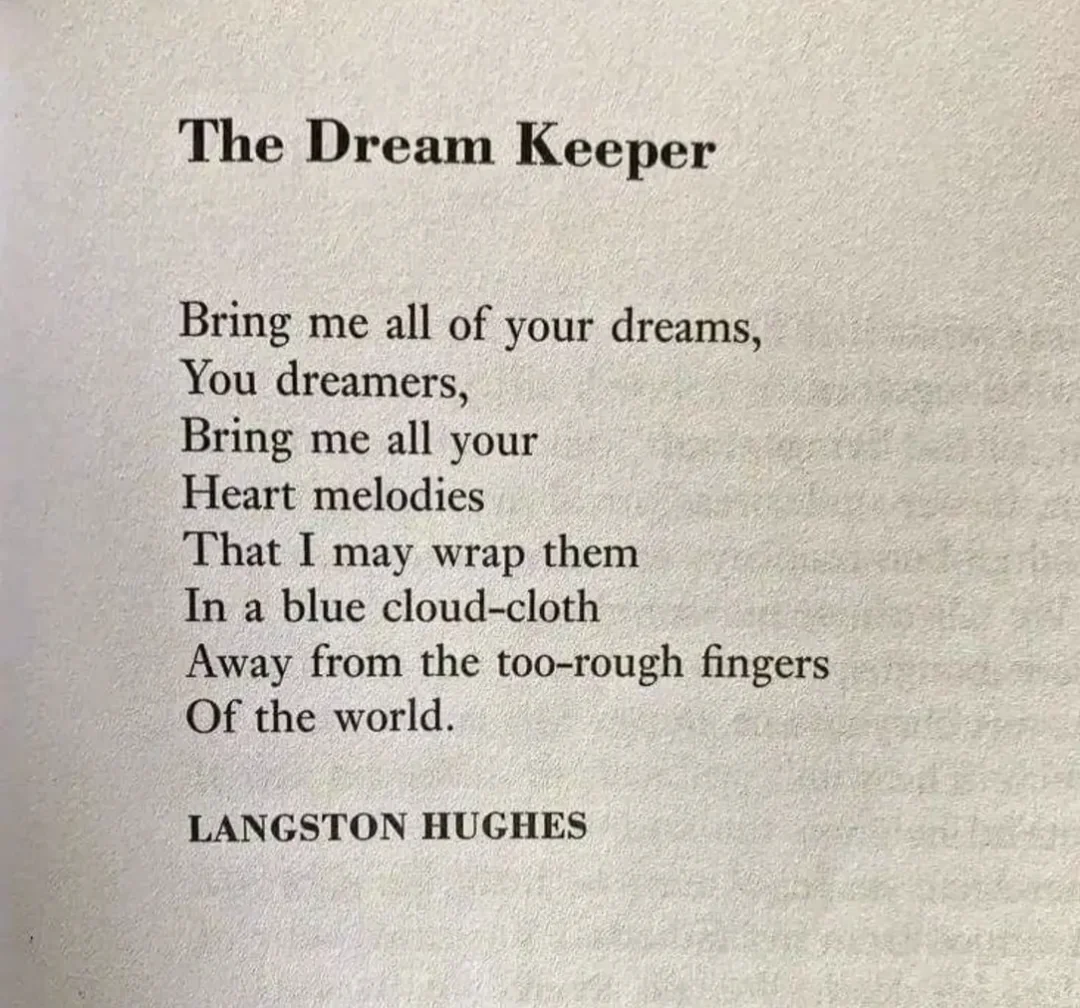
To compare dreams by langston hughes with other Langston Hughes poems reveals thematic consistencies and variations. For instance, in “Harlem” (also known as “A Dream Deferred”), Hughes questions what happens to postponed dreams—do they “explode”? Unlike the proactive tone in dreams, “Harlem” is interrogative, focusing on frustration rather than prevention.
Another comparison is with “I, Too,” where the speaker asserts belonging despite exclusion, echoing resilience. Both use simple structure, but dreams by langston hughes employs nature metaphors, while “I, Too” draws from domestic imagery. Hughes’ famous “The Negro Speaks of Rivers” explores ancestral depth, contrasting the brevity of dreams.
These comparisons highlight Hughes’ versatility; he adapts devices to suit messages, always centering dreams as vehicles for empowerment. Such analyses show his evolution from hopeful pleas to explosive critiques.

|
Poem Title |
Key Theme |
Main Metaphor |
Structure |
|
Dreams by Langston Hughes |
Importance of Dreams |
Broken-Winged Bird, Barren Field |
Two Stanzas, Repetition |
|
Harlem |
Deferred Aspirations |
Exploding, Festering Sore |
Single Stanza, Questions |
|
I, Too |
Racial Inclusion |
Eating in the Kitchen |
Free Verse, Affirmation |
|
The Negro Speaks of Rivers |
Ancestral Connection |
Ancient Rivers |
Extended Lines, Repetition |
This table illustrates shared elements like repetition while noting differences in tone and focus.
Why Is Hold Fast to Dreams Still Relevant Today?
The phrase “hold fast to dreams” from dreams by langston hughes resonates in contemporary society, where mental health crises and economic uncertainties threaten aspirations. In an era of social media pressures, the poem reminds us to prioritize inner visions over external validations, combating burnout and depression.
Modern interpretations apply it to global issues like climate change or inequality, where collective dreams drive activism. Educators use the poem to teach empathy, while therapists reference it for goal-setting. Its relevance lies in universality; whether pursuing education, career, or justice, holding onto dreams fosters growth.
As technology advances, the poem warns against distractions that let dreams die, encouraging mindful pursuit. In essence, dreams by langston hughes endures because it speaks to the human condition’s core— the need for hope.
What Meaning Does Dreams by Langston Hughes Hold for Personal Growth?
The meaning of dreams by langston hughes for personal growth is profound: dreams are catalysts for self-improvement. By urging us to hold on to your dreams, Hughes implies active nurturing through planning and perseverance. This meaning encourages reflection on barriers, turning obstacles into stepping stones.
In practice, the poem inspires goal-setting frameworks, like visualizing success to avoid a barren field. Its meaning extends to mental resilience; letting dreams go leads to regret, while clinging to them builds character. For individuals, this translates to daily affirmations, reinforcing Hughes’ call.
Ultimately, the meaning is empowering—dreams define purpose, and protecting them ensures a life that can fly high.
How Can You Achieve Deeper Understanding When You Read Dreams by Langston Hughes?
To achieve deeper insight when you read dreams by langston hughes, approach it layer by layer. First, read aloud to capture rhythm, noting how repetition builds intensity. Then, dissect images: visualize the bird and field to feel emotional weight.
Contextual reading enhances understanding; study Hughes’ biography for racial undertones. Discuss with others to uncover interpretations, like feminist or psychological lenses. Journaling responses— what dreams have you let die?— personalizes the experience.
Repeated readings reveal nuances, helping achieve profound connections to its timeless wisdom.
-
Dreams fuel resilience and prevent life’s stagnation, as vividly shown in Hughes’ metaphors.
-
The poem’s repetition and structure make its motivational message unforgettable and rhythmic.
-
Understanding the historical and racial context enriches appreciation of its empowering purpose.
-
Comparing to other Langston Hughes poems highlights consistent themes of aspiration amid challenges.
-
Applying “hold fast to dreams” today supports personal growth and societal progress.

FAQs About Dreams by Langston Hughes
What is the main theme in Dreams by Langston Hughes?
The main theme is the importance of dreams for a vibrant life, warning that without them, existence becomes stagnant like a broken-winged bird or barren field, emphasizing resilience and hope in about 40 words.
Who is the speaker in Dreams by Langston Hughes?
The speaker is an advisory voice, likely representing Hughes, urging readers universally to hold fast to dreams to avoid despair, serving as a motivational guide rooted in personal and societal experiences.
What metaphors does Langston Hughes use in the poem?
Hughes employs two metaphors: a life is a broken-winged bird that cannot fly for immobility, and a life is a barren field frozen with snow for sterility, vividly illustrating dream loss consequences.
What is the rhyme scheme in Dreams by Langston Hughes?
The rhyme scheme is ABCB in the first stanza and DEFE in the second, creating a subtle musicality that enhances the poem’s rhythmic flow and repetitive emphasis on holding dreams.
How does Dreams by Langston Hughes relate to the Harlem Renaissance?
It embodies the era’s spirit of aspiration amid racial struggles, with dreams symbolizing Black empowerment, reflecting Harlem Renaissance writers‘ push for cultural and social advancement through art.
What happens if dreams die according to the poem?
If dreams die, life becomes a broken-winged bird unable to fly, signifying lost potential and mobility, urging readers to protect ambitions to maintain life’s purpose and vitality.
Why should you hold fast to dreams as per Langston Hughes?
Hold fast to dreams to prevent life’s desolation; Hughes warns that letting them go leads to emptiness, promoting perseverance for personal fulfillment and overcoming challenges in daily existence.
Conclusion on Dreams by Langston Hughes
In conclusion, dreams by langston hughes remains a beacon of inspiration, weaving themes of hope and resilience into a compact yet powerful poem. Through its metaphors, poetic devices, and historical context, Hughes crafts a message that transcends time, urging us to safeguard our aspirations against life’s adversities.
From his Harlem Renaissance roots to modern applications, the poem teaches that dreams are the essence of progress, warning of the bleakness when they die or go. By exploring its summary, analysis, and deeper meanings, we gain tools for personal and collective growth, honoring Hughes’ legacy as a visionary poet. This exploration reaffirms why holding fast to dreams is not just advice but a necessity for a meaningful life.


