



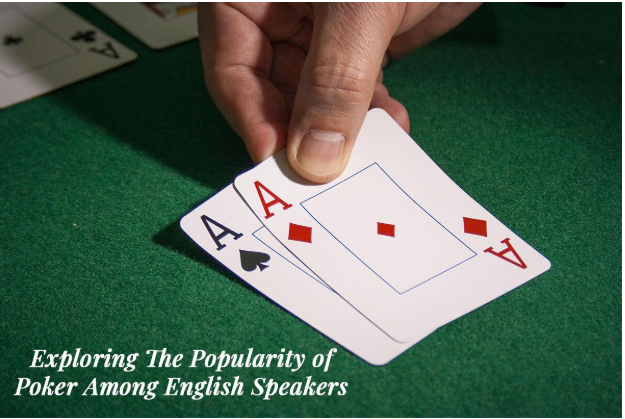
Poker wasn’t always the global phenomenon we know today. Back in the day, it was just a card game played in dimly lit rooms by people looking to pass the time. Now? It’s everywhere – from flashy Vegas casinos to your neighbor’s basement on Friday nights and all over the internet. But what’s made this game so incredibly popular, especially among English speakers? Let’s dive into that.
The Evolution of Poker in English-Speaking Countries
If you’re wondering where poker came from, you’d need to look back to the early 1500s. Card games from Europe and Asia laid the groundwork, with many historians pointing to the Persian game “As Nas” as a likely ancestor. This game used a 25-card deck and already had betting and hand rankings – sound familiar?
The French brought their game “Poque” to North America, and over time, it morphed into what we’d recognize as poker. By the time the Gold Rush hit in the 19th century, the 52-card deck was standard, and bluffing had become part of the strategy. Americans took to the game like fish to water, spreading it across saloons and riverboats throughout the country.
Fast forward to the 20th century, and poker hit a major milestone with the founding of the World Series of Poker in the ’70s. This wasn’t just a tournament – it was the moment poker stepped out of the shadows and into the spotlight as a legitimate competitive activity. When WSOP hit TV screens in 1973, poker had officially gone mainstream.
The poker game really exploded in popularity during the early 2000s. This wasn’t just a random surge – it coincided perfectly with the rise of the internet and the birth of online poker platforms. Suddenly, you didn’t need to visit a casino to play. You could just log on from your couch.
The Digital Revolution and Poker’s Surge in Popularity
Planet Poker launched in 1998 as the first real-money online poker site, and from there, things snowballed quickly. People who’d never set foot in a casino were suddenly playing multiple tables at once from their living rooms.
Remember when poker started showing up on TV all the time in the early 2000s? That wasn’t an accident. The invention of hole-card cameras lets viewers see players’ hidden cards, turning what could have been a boring card game into compelling television. You could watch pros like Doyle Brunson and Chris Moneymaker make decisions in real time, and suddenly everyone wanted to try their hand at poker.
Recent YouGov numbers tell us online poker in the UK doubled in popularity, jumping from 5% participation in 2021 to 10% in 2024. And who’s playing? Mostly people aged 35-54 (about 44% of players), with younger folks aged 18-34 not far behind at 43%. These numbers show poker isn’t just for old-timers in smoky rooms anymore – it’s attracting tech-savvy people looking for some competitive fun.
Demographics and Player Preferences
The poker world still skews heavily male – about 75% of online players worldwide are men, with women making up the remaining 25%. This matches what we see in gambling more broadly, where men typically outnumber women.
When it comes to money, most poker players (around 57%) keep things relatively modest, betting between £1 and £100 monthly. Another 28% go a bit higher, spending between £101 and £500. But here’s where it gets interesting – about 15% of online poker players spend over £500 monthly, which is way higher than what we see with online sports betting (just 4%) or slots (11%).
UK players seem to have their favorite platforms, too. PokerStars leads the pack with 16% of the market. Sky Poker and 888 Poker are tied for second place with 15% each, while Bet365 isn’t far behind at 14%. William Hill, Ladbrokes, and Paddy Power round out the major players, though with smaller shares.
Psychological Appeal and Strategic Depth
What keeps people coming back to poker? For one thing, it’s not just about luck. Sure, you can get dealt bad cards, but how you play them matters enormously. Unlike slots or roulette, poker rewards study and strategic thinking.
There’s also that whole psychological element – the “poker face,” the bluff, the tell. Mike Caro’s famous book “The Body Language of Poker” dug into this, showing how tiny physical cues can reveal what cards someone’s holding. For many players, this cat-and-mouse game is the real draw.
Cultural Impact and Media Representation
Poker has embedded itself in our culture in countless ways. Consider James Bond coolly facing down Le Chiffre in “Casino Royale,” or the dozens of poker movies that have hit theaters over the years. These representations have cemented poker as something more than just gambling – it’s become a metaphor for taking risks and reading people.
The explosion of poker literature shows just how much interest there is in the game. Hundreds of strategy books have been published in English, from beginner guides to dense explorations of game theory. Dan Harrington’s “Harrington on Hold’em” has sold over 300,000 copies – not bad for what’s essentially a textbook!
The Future of Poker in English-Speaking Communities
These days, poker is increasingly going mobile. Players can now join a game from their phones while waiting for the bus or sitting in a coffee shop. The COVID pandemic only accelerated this trend, as lockdowns forced even die-hard casino goers to try the online version.
Different countries have different rules about online poker, creating a patchwork of regulations that players have to navigate. This has made things complicated, but the poker community always finds a way.
Despite these challenges, poker’s future looks bright. The combination of skill, strategy, and social interaction continues to draw in new players while keeping veterans engaged. That fundamental thrill – outplaying your opponent, pulling off the perfect bluff, reading someone like a book – hasn’t changed since the game’s earliest days.
From its mysterious origins centuries ago to today’s multi-billion-dollar industry, poker has come a long way while staying true to what makes it special. Whether you’re playing online with strangers or around a kitchen table with friends, it’s still about the cards, the strategy, and the people across from you.


