

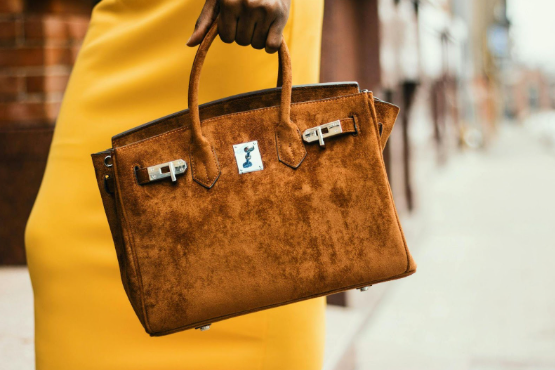
When do handbags stop being just bags, and become like museum pieces? It’s not just the logo or the leather. Certain designs capture a mood, a moment, sometimes an entire decade. They’re carried on red carpets, archived by collectors, and chased on the resale market long after the shop floor has moved on.
Think of them as small-scale sculptures with a job to do. They hold essentials, sure, but they also hold stories. That’s where collectibility begins: in the overlap of artistry and emotion. Let’s discuss the ingredients that turn a handbag into a cultural artefact. We won’t be surprised if you start looking for a second hand Hermes bag after reading this guide.
When Fashion Crosses into Art
Art and fashion are like neighbours who borrow sugar. With handbags, the line blurs even more. The best designs think like sculpture—volume, balance, negative space. A top handle becomes an arch. A flap becomes a plane. Hardware becomes punctuation. You can read the form the way you’d read a gallery piece: step back, take it in, notice the proportions.
Some houses even treat the surface like a canvas, playing with colour, patina, or intricate marquetry. Others channel architectural principles: clean geometry, tension between structure and softness, weight distributed so the bag sits just right. When an object you use daily also provokes a feeling, it moves beyond utility.
The Anatomy of Craftsmanship: Why Details Matter
Collectible handbags don’t happen by accident. They’re built slowly by artisan hands that know when to cut, when to ease, and when to stop. Materials are chosen for integrity as much as beauty: calfskin with a deep, even grain; crocodile with consistent scales; goatskin that resists scuffing.
Hardware isn’t an afterthought, either. Closures are engineered to bite cleanly and age gracefully. Edges are dyed, burnished, sometimes waxed, so they won’t fray under real life. The hours baked into a single piece are part of the value. Precision saddle stitching creates a lock-strong seam, panels are mirrored for symmetry, and lining is set without ripple or wave.
Stories Woven into Stitching: The Power of Provenance
Craft gets you respect. Story gives you goosebumps. Provenance is the trail a handbag leaves behind—who owned it, where it appeared, the moment that welded it to culture.
Picture the Hermès Kelly in the 1950s. A princess steps out of a car, lifts the bag, shields her pregnancy from a wall of flashbulbs, and—click—the photo travels the world. One moment. A lifetime of meaning.
Scarcity and Exclusivity: The Economics of Desire
Rarity works on the brain like a magnet. If everyone could stroll in and pick one up, the heartbeat would slow. Limited runs, seasonal colours that vanish, waitlists that come and go—these are the levers that turn want into need.
That chase becomes part of the charm. Messages with a sales associate. The quiet tip-off. The call. Finally, the reveal at the counter. When a design is as rare as hen’s teeth in the wild, owning it feels less like a purchase and more like a win.
Iconic Silhouettes that Stood the Test of Time
Trends flicker, while icons settle in and stay. Certain shapes are so right they become landmarks you can spot across a room.
- Hermès Birkin – A tote that means business without bluster, the Hermès Birkin is practical yet powerful, with generous gussets and steady handles.
- Chanel 2.55 – With a chain strap, quilted body, and burgundy lining, the Chanel 2.55 is a liberation of hands that still feels modern.
- Dior Saddle – The Dior Saddle, that swoop of a flap, perched like a little smile. It’s playful, bold, and endlessly photogenic.
- Fendi Baguette – A personality piece that loves embellishment—that’s what the wonderfully compact Fendi Baguette is about.
Art on Your Shoulder: More Than Just a Bag
For the most ardent collectors, a handbag is never ‘just a bag.’ It’s wearable art, a piece of history, and a vessel for stories and emotions.
From its design to its rarity, from its craftsmanship to its cultural relevance, every factor works together to elevate a bag beyond utility. It’s practically art that hangs on your shoulder. Best of all? You can get one from a reliable luxury consignment store like EMIER.
