

How does NYT Spelling Bee work? This captivating word puzzle, part of the New York Times Games, challenges players to create words from a set of seven letters arranged in a honeycomb grid, known as the hive.
With its unique blend of vocabulary, strategy, and creativity, the NYT Spelling Bee has become a daily obsession for word enthusiasts worldwide.
What Is the NYT Spelling Bee?
The NYT Spelling Bee is a daily word game that presents players with a hexagonal grid containing seven letters: one central letter and six surrounding letters. The objective is to form as many words as possible using these hive letters, with each word adhering to specific rules. Created by Frank Longo and launched in print in 2014, the digital version debuted on May 9, 2018, and has since gained a massive following, thanks to its engaging gameplay and social media community, known as the Hivemind.
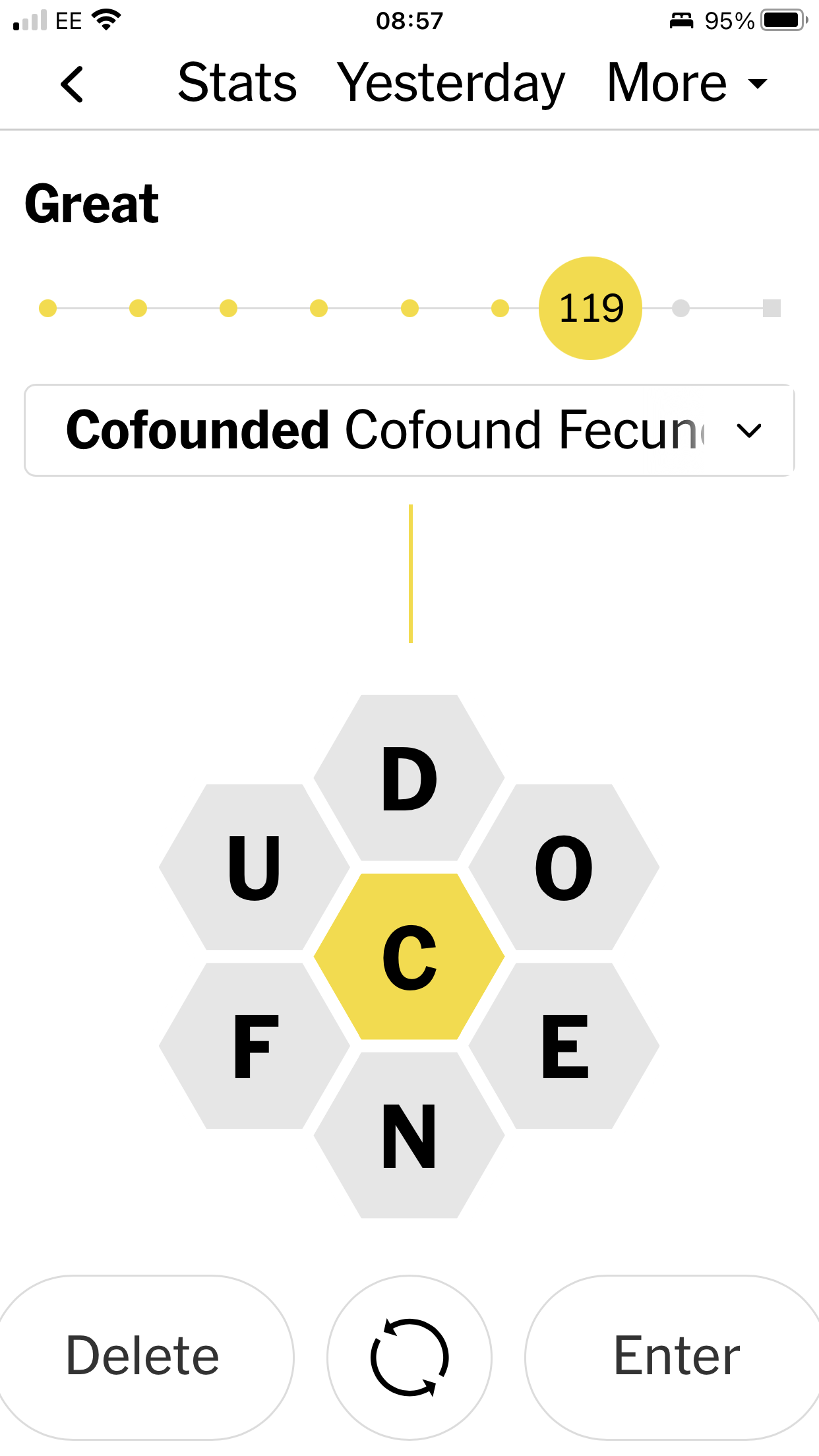
The game’s appeal lies in its simplicity and depth. Players of all skill levels can enjoy it, from beginners crafting four-letter words to experts hunting for the elusive pangram. The NYT Spelling Bee gameplay explained here will cover everything you need to know to play, score, and climb the ranks.
NYT Spelling Bee Rules: The Core Mechanics
To understand how to play NYT Spelling Bee, you must first grasp its fundamental rules. These guidelines ensure that every word you submit is valid and contributes to your score.
- Minimum Word Length: Every word must have at least four letters. Words with fewer than four letters trigger a “too short” message and are not accepted.
- Middle Letter Rule: Each word must include the central letter of the hive. If you omit this letter, the game displays a “missing center letter” message.
- Letter Reuse: You can use any of the seven hive letters multiple times within a single word, allowing for longer and more complex words.
- Word Restrictions: The NYT Spelling Bee word list excludes proper nouns, hyphenated words, offensive terms, and obscure words. If you enter an invalid word, you’ll see a “not in word list” message. Additionally, words containing letters outside the hive result in a “bad letters” error.
- Pangram Requirement: Each puzzle includes at least one pangram, a word that uses all seven letters at least once. Some puzzles may have multiple pangrams.
These NYT Games Spelling Bee rules form the foundation of the game, ensuring a challenging yet fair experience for all players.
How to Play NYT Spelling Bee
Playing the NYT Spelling Bee is straightforward but requires strategic thinking to maximize your score. Here’s a step-by-step breakdown of how to play NYT Spelling Bee:
- Access the Game: The puzzle is available daily on the New York Times Games website or app. It resets at 3:00 AM Eastern Standard Time, giving players 24 hours to solve each puzzle.
- View the Hive: The game presents a hexagonal grid with seven letters. The central letter is highlighted, and the six outer letters surround it.
- Form Words: Enter words by typing or tapping letters in the desired order. Each word must include the middle letter and be at least four letters long.
- Submit and Score: After entering a word, submit it to see if it’s valid. Valid words appear in a list on the screen, along with your current score and rank.
- Use Tools: A shuffle button allows you to rearrange the outer letters, sparking new word ideas. You can also check your rank progress by tapping the ranking bar.
The game’s interface is user-friendly, displaying your accepted words, total points, and current rank. On mobile devices, the word list appears above the hive, while on desktop, it’s to the right.
NYT Spelling Bee Scoring: How Points Are Calculated
The Spelling Bee point system is designed to reward longer words and pangrams, encouraging players to think creatively. Here’s how NYT Spelling Bee scoring works:
- Four-Letter Words: Each four-letter word earns 1 point.
- Longer Words: Words with five or more letters earn 1 point per letter. For example, a six-letter word scores 6 points, and an eight-letter word scores 8 points.
- Pangram Bonus: A pangram—a word using all seven letters at least once—awards an additional 7 points on top of the points for its length. For instance, a seven-letter pangram scores 14 points (7 for the letters + 7 for the pangram bonus).
- Total Points: Your score is the sum of points from all valid words. The game calculates your rank based on the percentage of total possible points in the puzzle.
| Word Type | Points Earned |
| Four-letter word | 1 point |
| Five-letter word | 5 points |
| Six-letter word | 6 points |
| Seven-letter pangram | 14 points (7 + 7 bonus) |
| Eight-letter pangram | 15 points (8 + 7 bonus) |
The Spelling Bee point system incentivizes finding longer words and pangrams to boost your score quickly.
What Is a Pangram in Spelling Bee?
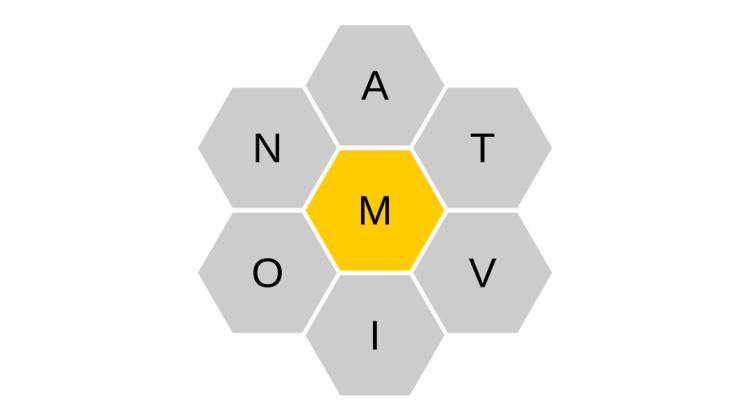
A pangram in Spelling Bee is a word that uses all seven hive letters at least once. It’s a key element of the game, offering a significant pangram bonus of 7 points. For example, in a puzzle with the letters A, B, E, L, N, O, and T (with T as the center letter), a word like “notable” would be a pangram because it includes all seven letters and the center letter.
- Perfect Pangram: A pangram that uses each letter exactly once, such as a seven-letter word like “notable” in the example above.
- Multiple Pangrams: Some puzzles have more than one pangram, each earning the 7-point bonus.
- Strategic Importance: Finding a pangram early can significantly boost your score and help you reach higher ranks faster. It may also reveal smaller words within it, such as “note” or “table.”
Pangrams are a thrilling part of the NYT Spelling Bee, as they often require creative combinations of letters and a sharp vocabulary.
NYT Spelling Bee Rank Levels: From Beginner to Queen Bee
The NYT Spelling Bee rank levels provide a sense of progression and achievement, motivating players to improve their scores. Ranks are based on the percentage of total possible points in a puzzle. Here’s a breakdown of the NYT Spelling Bee beginner to Queen Bee ranks:
| Rank | Description |
| Beginner | Starting rank for all players, achieved with minimal points. |
| Good Start | Early progress, typically after a few four-letter words. |
| Moving Up | Indicates you’re finding more words and building momentum. |
| Good | A respectable score, often achieved with a mix of short and longer words. |
| Solid | Above-average performance, showing a good grasp of the puzzle. |
| Nice | Strong performance, often reached by finding longer words or a pangram. |
| Great | Impressive score, indicating you’ve found a significant number of words. |
| Amazing | Near the top, often achieved by finding most words and at least one pangram. |
| Genius | Elite level, typically requiring 60-70% of total points, including a pangram. |
| Queen Bee | The ultimate achievement, earned by finding every possible word in the puzzle. |
- Genius Level: Reaching Genius usually requires around 50-100 points, depending on the puzzle’s difficulty. Finding a pangram can help you hit this rank with fewer words, as it accounts for a large portion of points.
- Queen Bee Status: Achieving Queen Bee status means you’ve found every word in the NYT Spelling Bee word list for that day. This is a rare and prestigious accomplishment, often requiring 60-150 points, depending on the puzzle.
The NYT Spelling Bee rank levels add a gamified element, making each puzzle a quest to climb the leaderboard.
NYT Spelling Bee Puzzle Reset Time
The NYT Spelling Bee puzzle reset time is 3:00 AM Eastern Standard Time (midnight Pacific Standard Time). This means a new puzzle becomes available daily at the same time, regardless of your location. Unlike some other word games that reset at local midnight, the NYT Spelling Bee uses a universal reset time, ensuring all players worldwide tackle the same puzzle simultaneously.
Players often set alarms to start the new puzzle as soon as it drops, especially dedicated solvers in the Hivemind community who share their scores and strategies on social media.
Strategies to Master NYT Spelling Bee
To excel at the NYT Spelling Bee and aim for Queen Bee status, you need a blend of vocabulary, pattern recognition, and strategic thinking. Here are proven tips to boost your gameplay:
- Start with Four-Letter Words: Begin by finding all possible four-letter words to build a foundation. These are often the easiest to spot and help you get a feel for the hive letters.
- Look for Common Endings: Add suffixes like “-ed,” “-ing,” “-tion,” or “-s” (for plurals) to existing words. For example, if “run” is valid, try “running” or “runs.”
- Seek the Pangram Early: Finding a pangram can give you a significant point boost and reveal smaller words within it. Focus on combining all seven letters creatively.
- Use the Shuffle Button: The shuffle button rearranges the outer letters, offering a fresh perspective that can spark new word ideas.
- Leverage Common Letters: Letters like E, A, R, and T appear frequently in English words. Look for combinations like “-ent,” “-ant,” or “-ion” to form longer words.
- Take Breaks: If you’re stuck, step away and return later. A fresh mind often spots words you missed earlier.
- Check the Two-Letter List: The game’s interface provides a two-letter list showing how many words start with specific letter pairs (e.g., “AN-5” means five words start with “AN”). This can guide your word-hunting.
| Strategy | Benefit |
| Start with four-letter words | Builds a quick point base and familiarizes you with the letters |
| Use suffixes | Expands short words into longer, higher-scoring ones |
| Find the pangram | Earns a 7-point bonus and reveals smaller words |
| Shuffle the hive | Sparks new word ideas by changing letter arrangement |
| Take breaks | Refreshes your perspective, helping you spot missed words |
Unique Features of NYT Spelling Bee
The NYT Spelling Bee stands out among word games due to several distinctive features:
- BINGO: In some puzzles, you can form words starting with each of the seven hive letters, known as a BINGO. This is a fun challenge but not always possible.
- Hivemind Community: The passionate community of players, known as the Hivemind, shares tips, scores, and hints on social media platforms using hashtags like #nytsb and #hivemind.
- Beeatrice: The game’s cartoon bee mascot, Beeatrice, designed by Robert Vinluan, welcomes players and celebrates milestones like reaching Genius or Queen Bee.
- No S Rule: Editor Sam Ezersky avoids including the letter S in puzzles (except on rare occasions, like the 2,500th puzzle on March 12, 2025), as it makes plurals too easy to form.
These elements add charm and community engagement to the NYT Spelling Bee, making it more than just a word game.
Challenges and Tips for Reaching Queen Bee Status
Achieving Queen Bee status is the ultimate goal for NYT Spelling Bee players, but it’s no easy feat. Here are common challenges and how to overcome them:
- Challenge: Missing Obscure Words: The NYT Spelling Bee word list includes less common words like “aahed” or “sheol” that players might overlook.
Tip: Familiarize yourself with recurring unusual words by reviewing past puzzles or using the two-letter list to identify missed combinations. - Challenge: Overlooking Pangrams: Pangrams can be hard to spot, especially in complex puzzles.
Tip: Experiment with longer words (seven or more letters) and systematically try combinations that include all hive letters. - Challenge: Time Constraints: With only 24 hours per puzzle, players may feel rushed.
Tip: Play in short sessions throughout the day, as inspiration often strikes during breaks. - Challenge: Getting Stuck: After finding obvious words, progress can stall.
Tip: Use the shuffle button and focus on letter pairs or common word endings to unlock new possibilities.
Reaching Queen Bee requires persistence, a broad vocabulary, and strategic use of the game’s tools. Some players aim for milestones like GN4L (Genius without four-letter words) or QBABM (Queen Bee All By Myself, without hints), adding extra layers of challenge.
Why NYT Spelling Bee Is So Addictive
The NYT Spelling Bee captivates players with its blend of simplicity and depth. Here’s why it’s so engaging:
- Daily Challenge: The NYT Spelling Bee puzzle reset time at 3:00 AM EST creates a sense of urgency and routine, encouraging players to return daily.
- Progressive Ranks: The NYT Spelling Bee rank levels provide clear goals, from Beginner to Queen Bee, motivating players to improve.
- Community Engagement: The Hivemind community fosters camaraderie, with players sharing strategies and celebrating achievements.
- Mental Stimulation: The game sharpens vocabulary, pattern recognition, and creative thinking, making it both fun and intellectually rewarding.
FAQs About How Does NYT Spelling Bee Work
- What are the basic NYT Spelling Bee rules?
Words must be at least four letters long, include the middle letter, and use only the seven hive letters. Proper nouns, hyphenated words, and obscure terms are not allowed. - How does NYT Spelling Bee scoring work?
Four-letter words score 1 point, longer words score 1 point per letter, and pangrams earn an extra 7 points. Your score determines your rank. - What is a pangram in Spelling Bee?
A pangram is a word that uses all seven hive letters at least once, earning a 7-point pangram bonus. - When does the NYT Spelling Bee puzzle reset?
The puzzle resets daily at 3:00 AM Eastern Standard Time, offering a new set of letters for players worldwide. - How can I reach Queen Bee status?
To achieve Queen Bee status, find every word in the daily NYT Spelling Bee word list, often requiring 60-150 points and at least one pangram. - What is the middle letter rule in NYT Spelling Bee?
Every word must include the central letter of the hive, or it will be rejected with a “missing center letter” message. - Can I use letters multiple times in NYT Spelling Bee?
Yes, you can reuse any of the seven hive letters as many times as needed within a single word.
Conclusion on How Does NYT Spelling Bee Work
Understanding how does NYT Spelling Bee work unlocks a world of wordplay, strategy, and community engagement. With its simple yet challenging NYT Spelling Bee rules, dynamic scoring system, and rewarding rank levels, the game offers endless opportunities for players to test their vocabulary and aim for Queen Bee status.
Whether you’re a beginner crafting four-letter words or a seasoned solver chasing pangrams, the NYT Spelling Bee provides a daily dose of mental stimulation and fun. By mastering the hive letters, leveraging tools like the shuffle button, and engaging with the Hivemind community, you can elevate your gameplay and join the ranks of word game royalty. Start playing today and see how far you can climb!
