


Literary techniques allusion is a powerful storytelling tool that enriches narratives by referencing other texts, historical events, myths, or cultural symbols. The allusion in literature works subtly—writers hint at something familiar to readers without directly explaining it. This encourages readers to draw connections, deepening the meaning of the work.
Allusions appear in novels, poetry, plays, and modern writing, making them one of the most enduring devices in the literary world. Whether in the form of historical allusions in novels, biblical allusions in poetry, or contemporary cultural nods, they give texture to storytelling. Understanding the types of allusion and their uses is essential for readers and writers who want to interpret or craft layered narratives.
Allusion in Literature: Definition and Concept
The allusion in literature is an indirect reference to a person, place, event, or another work of art. Instead of explaining the reference, the author relies on the reader’s prior knowledge to understand its significance. This creates a shared intellectual connection between the writer and the audience.
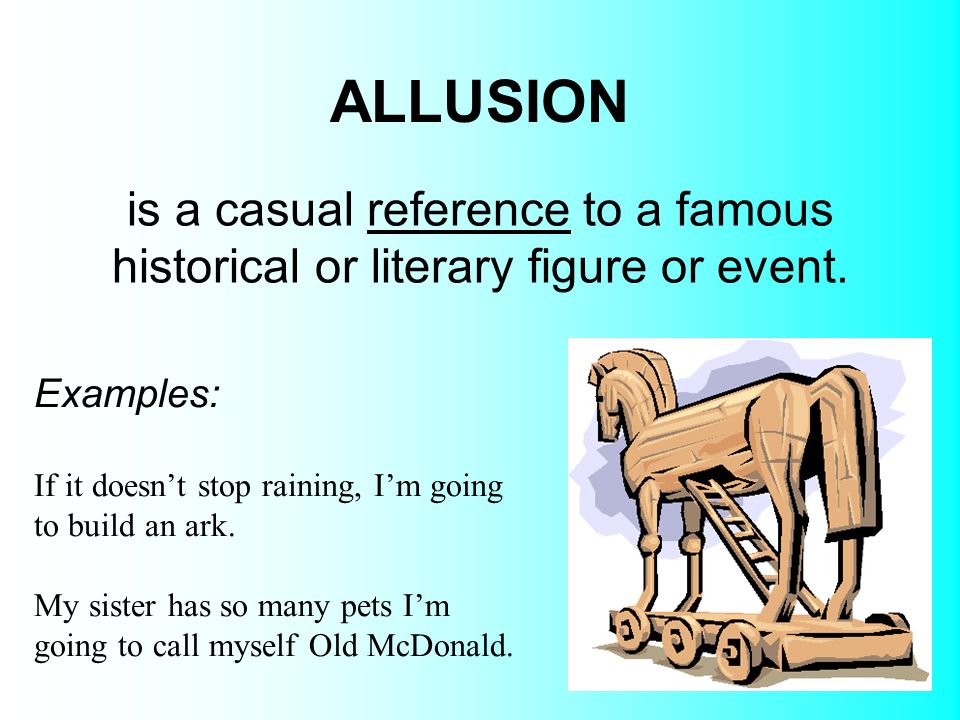
Key characteristics of literary allusion:
- Indirect rather than overtly stated.
- Depends on the reader’s familiarity with the reference.
- Enhances meaning without lengthening the text.
Writers often use allusion to make a point quickly, evoke emotion, or create resonance with larger cultural ideas. For example, calling a character a “real Romeo” alludes to Shakespeare’s Romeo and Juliet and instantly conveys the idea of a romantic lover without lengthy description.
Types of Allusion
Understanding the types of allusion helps in recognizing them in literature and in crafting original writing.
- Historical Allusion – References to significant historical figures or events. Example: Comparing a political downfall to “Watergate.”
- Biblical Allusion – References from religious texts, especially the Bible. Example: Referring to a betrayal as a “Judas kiss.”
- Mythological Allusion – Drawn from Greek, Roman, Norse, or other mythologies. Example: Calling someone “Herculean” to suggest great strength.
- Literary Allusion – Referring to other works of literature. Example: Mentioning “a whale of a problem” as a nod to Moby-Dick.
- Cultural Allusion – Referencing popular music, films, or celebrities. Example: Saying “this is their Titanic” to suggest inevitable disaster.
- Political Allusion – References to policies, leaders, or government events.
- Personal Allusion – Reference to events or people known only to a specific audience.
Purpose of Allusion in Storytelling
The purpose of allusion in storytelling extends beyond adding decorative references. It plays several critical roles:
- Enrichment of meaning – Adds layers to the text without extra explanation.
- Economy of words – Conveys complex ideas quickly.
- Connection with readers – Establishes shared cultural or intellectual ground.
- Emotional depth – Evokes strong responses based on the reader’s recognition.
- Thematic reinforcement – Links the story’s themes to broader narratives.
For instance, in dystopian novels, an allusion to 1984 can immediately signal themes of surveillance and oppression.
Historical Allusions in Novels
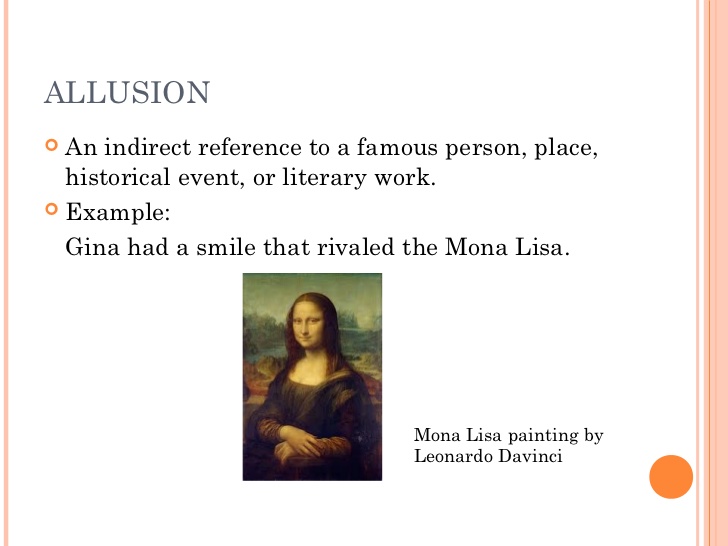
Historical allusions in novels create authenticity, context, and resonance. Writers use them to draw parallels between fictional events and real-world history.
Examples include:
- Referring to a character’s ambition as “Napoleonic” to suggest ambition mixed with authoritarian tendencies.
- Setting a scene during the Great Depression to evoke the struggles of that period.
Such references enrich the setting and character motivations while helping readers connect the fictional world to historical memory.
Biblical Allusions in Poetry
Biblical allusions in poetry have been a staple for centuries, often carrying symbolic weight. Poets draw from biblical imagery, characters, and stories to explore themes of morality, sin, redemption, and fate.
Common examples:
- Alluding to the Garden of Eden to represent innocence lost.
- Referring to a flood as a modern “Noah’s Ark” moment.
Biblical allusions often resonate even with readers who are not deeply familiar with religious texts because the symbols have permeated cultural consciousness.
Allusion vs Reference
While allusion vs reference may seem similar, they have subtle differences.
| Feature | Allusion | Reference |
| Definition | Indirect hint requiring interpretation | Direct mention or citation |
| Reader’s Role | Must infer meaning | No inference needed |
| Example | “He met his Waterloo” | “Napoleon was defeated at Waterloo in 1815” |
Allusions invite deeper engagement, while references focus on clarity and factual accuracy.
Famous Allusion Examples
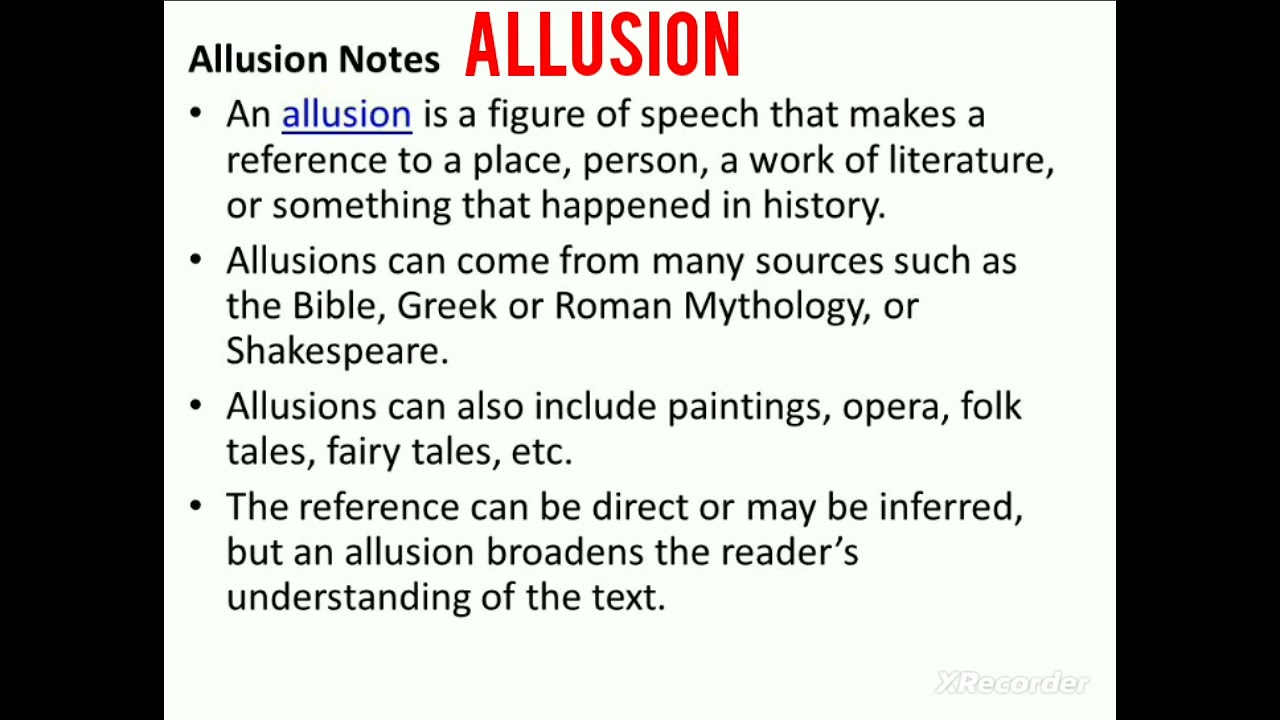
Some famous allusion examples have become so common that people use them daily without realizing their literary origins:
- “Achilles’ heel” – From Greek mythology, meaning a single weakness.
- “Big Brother” – From Orwell’s 1984, symbolizing intrusive government surveillance.
- “Pandora’s box” – Greek myth about unleashing unforeseen troubles.
- “Scrooge” – From A Christmas Carol, meaning a miserly person.
These examples show how allusions can transcend their original context to become part of everyday language.
How to Identify an Allusion
Recognizing how to identify an allusion involves careful reading and cultural awareness.
Steps:
- Look for unusual phrases or names that seem significant.
- Consider whether the author expects the reader to recognize them.
- Connect the hint to historical, cultural, religious, or literary sources.
- Interpret how it relates to the current story or character.
Strong readers develop a mental library of cultural touchstones, making it easier to spot allusions.
Importance of Allusion in Fiction
The importance of allusion in fiction lies in its ability to make stories richer and more meaningful. By tapping into a reader’s existing knowledge, authors can:
- Create irony or humor.
- Build thematic depth without slowing the narrative.
- Link the story to broader cultural or historical conversations.
Without allusion, many works would feel flat, missing the extra layer of resonance that makes literature timeless.

FAQs about Literary Techniques Allusion
What is the definition of an allusion in literature?
An allusion is an indirect reference to a known person, event, work, or concept, relying on the reader’s recognition.
What are the main types of allusion?
Historical, biblical, mythological, literary, cultural, political, and personal.
Can allusions be modern?
Yes, many authors reference current events, celebrities, or media.
Why do writers use allusions?
To enrich meaning, connect with readers, and add layers without long explanations.
How can I identify an allusion?
Spot references that seem familiar and connect them to known works or events.
Is there a difference between allusion and reference?
Yes, an allusion is indirect, while a reference is explicit.
Can an allusion be unintentional?
Sometimes, but most are deliberate literary choices.
Conclusion of Literary Techniques Allusion
The literary techniques allusion serves as one of the most versatile and impactful devices in literature. From biblical allusions in poetry to historical allusions in novels, from subtle hints to well-known famous allusion examples, these references bridge the gap between writer and reader.
Understanding the types of allusion, the purpose of allusion in storytelling, and how to identify an allusion equips readers to appreciate deeper meanings and equips writers to create richer works. The enduring importance of allusion in fiction lies in its ability to connect stories across time, culture, and genre, ensuring literature remains a layered and resonant art form.
