


Writers often use pun examples figures of speech to entertain readers and sharpen meaning. Shakespeare loved puns, such as in Romeo and Juliet when Mercutio, dying from a wound, says, “Ask for me tomorrow and you shall find me a grave man.”
Here, “grave” means both serious and literally in a grave. Everyday conversations also sparkle with puns, like a bakery saying, “We knead your support.” These wordplays make language engaging and often lighten serious moments. By layering multiple meanings into one phrase, puns showcase how versatile and playful language can be when used smartly.
Understanding the Pun as a Figure of Speech

What is a Pun as a Figure of Speech
A pun is a witty form of figure of speech where a word or phrase is used to suggest two or more meanings. It relies on wordplay, often creating humor, irony, or cleverness in language. Puns are common in literature, speeches, and even everyday jokes.
They can be homophonic (words that sound alike but have different meanings) or homographic (words spelled the same but with varied meanings). For example, “Time flies like an arrow; fruit flies like a banana” is a pun because it plays on different meanings of “flies.” As a figure of speech, puns add creativity, laughter, and memorable twists to writing and conversation.
What Is the Definition of a Pun?
The definition of pun describes it as a literary device that plays on the double meaning or similar-sounding words to create a humorous effect or clever twist. A pun is a play on the meanings of a word or words that sound alike but differ in meaning. In simple terms, a pun uses ambiguity to surprise or amuse, such as “I can’t tuna fish” playing on “tune a” and “tuna.”
The pun definition highlights its reliance on pronunciation or spelling to achieve rhetorical effect. Puns are often brief but impactful, making them a staple in both casual and formal language.
How Puns Rely on Double Meanings
A pun relies on the understanding of multiple meanings or similar or identical sounds. For example, a pun on the word “bark” could refer to a dog’s sound or tree covering, creating ambiguity. This double meaning is central to the pun’s charm, as it invites readers to unpack the meanings of the word.
Puns may also use homonyms—words with the same pronunciation or spelling but different meanings. This clever wordplay ensures puns resonate by engaging the audience’s intellect.
Puns as a Form of Figurative Language
A pun is a figure of speech within figurative language, as it deviates from literal meaning to convey deeper or humorous insights. Puns are typically categorized alongside metaphors or similes, but their unique play on the word sets them apart. For instance, “Time flies when you’re having fun” puns on “flies” as both movement and insects.
Figurative language like puns enriches communication by adding wit. The pun is a type of wordplay that thrives on several meanings, making it a dynamic tool for expression.
Types of Puns and Their Mechanics
Homophonic Puns: Playing with Similar Sounds
A homophonic pun uses words that sound similar but have different meanings, relying on homophones. For example, “I’m reading a book on anti-gravity; it’s impossible to put down” plays on “put down” as both lowering and disliking. This type of pun capitalizes on similar sounds for humor.
Homophonic wordplay is common in pun jokes, as it’s accessible and quick to grasp. These puns delight by surprising listeners with unexpected meanings.
Homographic Puns: Exploiting Multiple Meanings
A homographic pun involves words that are spelled the same but have different meanings, using homographs. For instance, “The wind was strong; it blew my mind” puns on “blew” (air movement) and “blow” (amaze). This type of pun thrives on homographic ambiguity.
Homographic puns require readers to recognize the second meaning, making them ideal for written contexts where spelling is clear. They add sophistication to wordplay.
Compound and Recursive Puns: Layered Wordplay
A compound pun contains two or more puns in one sentence, layering meanings for complex humor. For example, “Bakers loaf around, but their bread rises” puns on “loaf” (idle/bread) and “rises” (baking/uplifting). A recursive pun builds on itself, like “This pun is cheesy, but it’s grate” (cheese/great).
These types of puns demand cleverness, as they juggle multiple meanings in a single phrase, enhancing the humorous impact.
Visual Puns and Double Entendres
A visual pun relies on imagery rather than words, such as a cartoon showing a “barking” tree with a dog’s face. Double entendres, like “She broke the bank” (money/embankment), use double meaning for suggestive or humorous effects. Both are forms of humor that expand pun versatility.
These puns engage audiences visually or contextually, adding variety to wordplay. Puns can be used in diverse media, from comics to speeches.
| Type of Pun | Mechanism | Example | Effect |
| Homophonic Pun | Same sound, different meaning | “I’m impressed with the picture quality” (pressed/image) | Quick humor via sound |
| Homographic Pun | Same spelling, different meaning | “The bear could bear the cold” (animal/endure) | Clever written wordplay |
| Compound Pun | Multiple puns in one phrase | “Bakers knead dough to rise” (knead/need, rise/bread) | Layered humor |
| Recursive Pun | Builds on prior pun | “This cheese pun is grate, but it’s cheesy” | Sustained wit |
| Visual Pun | Image-based wordplay | Cartoon of a “barking” tree | Visual humor |
| Double Entendre | Suggestive dual meaning | “She’s a real catch” (person/fish) | Subtle or risqué humor |
This table summarizes types of puns, highlighting their mechanics and effects.
Pun Examples Across Contexts

Common Examples of Puns in Everyday Speech
Common examples of puns appear in everyday speech, like “I’m no cheetah at running” (cheater/animal). These puns use words that sound alike to create quick wit, making conversations lively.
Puns are frequently used in casual settings, as they’re easy to craft. For instance, “Let’s ketchup later” plays on “catch up” and “ketchup,” adding playful meaning.
Classic Pun Jokes for a Humorous Effect
Pun jokes are designed to create humor. Examples include:
- “Why did the tomato turn red? It saw the salad dressing!” (dressing/clothes).
- “I can’t tuna fish; it’s out of key.” (tuna/tune).
These examples of puns rely on similar-sounding words for a humorous effect, making them popular in comedy.
Examples of Puns in Literature
Examples of puns in literary works showcase their depth. Shakespeare’s Mercutio in Romeo and Juliet says, “Ask for me tomorrow, and you shall find me a grave man,” punning on “grave” (serious/death). Such puns add wit and tragedy.
Modern authors also use puns, like in Douglas Adams’ The Hitchhiker’s Guide to the Galaxy, where wordplay enhances humor. These puns enrich literary works.
Puns in Literary Works: Shakespeare and Beyond
William Shakespeare’s Mastery of Puns
William Shakespeare was a pun virtuoso, using paronomasia to weave humor and depth. In Hamlet, “Not so, my lord; I am too much in the sun” puns on “sun” and “son,” reflecting Hamlet’s mood. Shakespeare’s puns often served rhetorical effect.
His use of puns made dialogues dynamic, blending wit with meaning. Puns in the same sentence were common, showcasing his linguistic prowess.
Puns as a Literary Device in Modern Works
Puns are often used in modern literature to highlight themes. In Neil Gaiman’s Good Omens, puns like “angelic” behavior (literal/figurative) add humor. Puns can be used to underscore character traits or plot points.
As a literary device, puns maintain relevance, engaging readers with clever wordplay. They add layers to meanings of a word, enhancing narratives.
How Puns Enhance Rhetorical Effect
Puns serve as a rhetorical device by emphasizing ideas through double entendres. In speeches, a pun like “we’re banking on success” (bank/money) clarifies goals humorously. This rhetorical effect makes arguments memorable.
Puns in literature or oratory highlight several meanings, engaging audiences by inviting them to unpack ambiguity. They’re a powerful tool for persuasion.
The Role of Puns in Humor and Wit
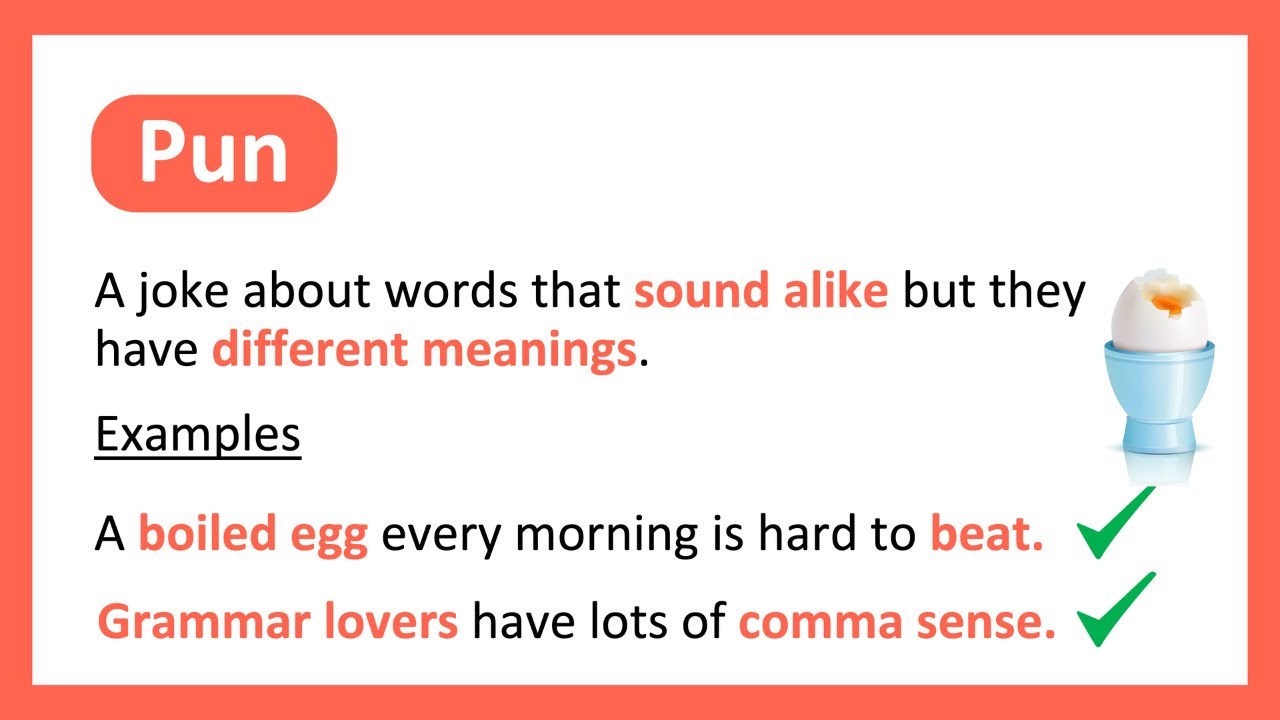
Why Puns Create Humor
Puns create humor by exploiting words with similar sounds or spellings, surprising listeners with unexpected meanings. The pun relies on the understanding of double meaning, making the brain connect disparate ideas, which sparks laughter.
Puns are typically humorous because they’re concise and clever, appealing to our love of wit. A pun may shift context, amplifying the humorous effect.
Puns in Jokes and Everyday Language
Pun jokes thrive in casual settings, like “I’m reading a book on glue; I can’t put it down.” Puns in everyday speech, such as “let’s make a clean break” (end/cleaning), add flair to communication.
These common examples of puns make language playful, ensuring puns are frequently used to lighten conversations.
The Art of the “Pun Intended” Moment
The phrase “pun intended” acknowledges a deliberate play on words, like “I’m a cut above, pun intended” (better/haircut). It signals wit, inviting laughter. Conversely, “no pun intended” downplays accidental wordplay, maintaining focus.
This use of pun enhances engagement, as listeners appreciate the intentional humorous twist.
Crafting Puns: Tips for Writers
How to Use Puns Effectively in Writing
To use puns effectively, writers should align them with context. A pun involving a character’s profession, like “the chef cooked up a plan,” reinforces themes. Using a pun requires subtlety to avoid forced humor.
Puns should enhance meaning, not distract. Writers can use words with multiple meanings to craft seamless wordplay, ensuring narrative flow.
Avoiding Overuse: Balancing Pun and Clarity
Puns should be used sparingly to maintain clarity. Overloading text with puns risks confusing readers, diluting meaning. A pun would work best when it supports the story, like a single homonymic pun for emphasis.
Balancing puns with literal meaning ensures rhetorical effect without overwhelming the audience.
Using Puns to Highlight Themes or Ideas
Puns can highlight themes, like a pun on the word “light” in a story about hope (illumination/weight). Words to create thematic depth make puns powerful. Writers should choose puns that reinforce meanings of a word.
- Puns are a play on words that create humor or emphasize meaning.
- Types of puns include homophonic, homographic, compound, and visual.
- Shakespeare mastered puns, blending wit with thematic depth.
- Pun examples like “I can’t tuna fish” showcase wordplay’s charm.
- Puns in everyday speech add flair to communication.
- Writers should use puns strategically to enhance rhetorical effect.
- The pun’s versatility makes it vital in literature and humor.
This use of pun adds sophistication, making stories resonate with layered meaning.
FAQs About Pun Examples Figures of Speech
What is a pun?
A pun is a figure of speech that uses double meaning or similar sounds to create humor or emphasize ideas, like “I’m a cut above” (better/haircut).
What are the types of puns?
Types of puns include homophonic, homographic, compound, recursive, visual, and double entendres, each leveraging multiple meanings or similar sounds.
Can you give an example of a pun?
An example of a pun is “Bakers loaf around” (idle/bread), a homophonic pun creating humor through wordplay.
How did Shakespeare use puns?
Shakespeare used puns for wit, like Mercutio’s “grave man” in Romeo and Juliet, blending double meaning with thematic depth.
What is a homophonic pun?
A homophonic pun plays on words that sound alike, like “I can’t tuna fish” (tune/tuna), creating a humorous effect.
What is the difference between a pun and a double entendre?
A pun uses wordplay for humor, while a double entendre often has suggestive meanings, like “She’s a real catch” (person/fish).
Why are puns humorous?
Puns create humor by surprising with double meanings or similar-sounding words, engaging the brain’s love for clever wordplay.
Conclusion on Pun Examples Figures of Speech
Puns are a vibrant form of humor that elevate language through clever wordplay. As a figure of speech, the pun uses double meanings, homophones, or homographs to spark laughter and insight, from William Shakespeare’s intricate dialogues to modern pun jokes.
Puns are often celebrated for their wit, whether in literary works or everyday speech. By mastering types of puns like homophonic, homographic, or compound, writers can use puns to enrich narratives and engage audiences. The pun’s ability to blend humor with meaning ensures its timeless appeal, making it a powerful literary device that continues to delight and inform.
