


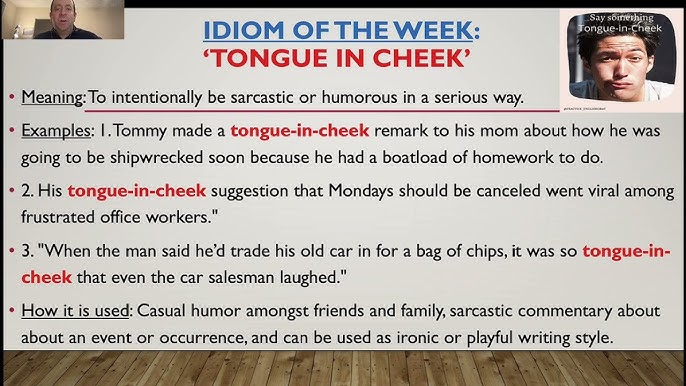
Tongue in cheek meaning defines a phrase or statement delivered with subtle irony, not meant to be taken seriously. In English, this expression conveys a playful, facetious attitude, often using humor to express an idea without literal intent.
The tongue-in-cheek approach, rooted in American and English communication, relies on tone and context to signal that the remark is a joke. For instance, saying “Oh, you’re clearly the world’s best chef” after a burnt meal is a classic tongue-in-cheek example, blending wit with a whimsical touch.
What is the Tongue-in-Cheek Definition?

Defining Tongue-in-Cheek
The tongue-in-cheek definition, as found in a dictionary, describes it as an adjective characterizing a statement or expression made with subtle irony or sarcasm. It implies that the word or phrase is not to be taken literally, but rather as a humorous or facetious comment. For example, a tongue-in-cheek remark like “I’m sure this meeting will solve all our problems” suggests skepticism without overt criticism, relying on tone to convey the joke.
Origins of the Phrase
The tongue-in-cheek expression is believed to originate from the 18th-century English practice of placing one’s tongue in the cheek as a gesture to suppress laughter or indicate disbelief. This facial expression subtly signaled that the speaker’s words were not serious. Over time, the phrase evolved into a saying used in both American English and broader English contexts, becoming a staple in wordplay and literary communication.
How Does Tongue and Cheek Shape the Expression?
Literal vs. Figurative Use
The tongue and cheek in the tongue-in-cheek phrase originally referred to a physical gesture. By pressing the tongue against the cheek, speakers could hide amusement or disbelief, creating a subtle sign of their true opinion. Today, the expression is purely figurative, used to describe a manner of speaking that blends irony with a playful tone, often to amuse or gently mock without contempt.
Role of Facial Expressions
While the modern tongue-in-cheek remark doesn’t require literal facial expressions, voice and delivery play a crucial role. A raised eyebrow or a sly smile can indicate the ironic intent, ensuring the audience understands the joke. This non-verbal cue enhances the expression, making it a dynamic tool in English communication, especially in social settings where humor is valued.
How Does Tongue-in-Cheek Convey Irony in English?
Crafting Ironic Remarks
Tongue-in-cheek thrives on irony, where the speaker’s words mean the opposite of their literal interpretation. For example, saying “What a perfect day for a picnic” during a storm is a tongue-in-cheek sentence that uses irony to highlight the absurdity of the situation. This adjective describes remarks that are facetious, avoiding direct criticism while still conveying a point.
Examples in Everyday Sentences
Here are some tongue-in-cheek examples in English:
- “I’m sure you’ll win an Oscar for that performance,” said a friend, tripping over a step.
- “This is the fastest internet in the world,” muttered during a slow connection. These sentences use a playful tone to express humor, ensuring the remark isn’t meant to be taken seriously, yet still delivers a witty observation.
The Attitude Behind Tongue-in-Cheek Statements

Balancing Playful and Facetious
The tongue-in-cheek attitude is lighthearted, often whimsical, and designed to spark laughter without offense. It requires a delicate balance to avoid sounding sarcastic or harsh. For instance, a tongue-in-cheek comment like “You must be a math genius” after a simple calculation error is funny because it’s delivered with a playful manner, not contempt.
Avoiding Misinterpretation
To ensure a tongue-in-cheek statement is understood, context and delivery are key. The voice—whether in spoken or written form—must indicate the ironic intent. Without this, the expression risks being taken literally, leading to confusion. Writers and speakers use exaggerated phrasing or context clues to signal the joke, making tongue-in-cheek a nuanced tool in English communication.
Tongue-in-Cheek in American English
Popularity in American Wordplay
In American English, tongue-in-cheek is popular in wordplay due to its ability to convey humor subtly. Comedians, writers, and everyday speakers use it to add wit to conversations. For example, a politician might make a tongue-in-cheek remark like “I’m confident my opponent’s plan will save the universe,” using irony to critique without direct confrontation.
Cultural Context
The usage of tongue-in-cheek in American culture reflects a preference for indirect humor. Unlike blunt sarcasm, tongue-in-cheek remarks are softer, often used in professional or social settings to maintain politeness. This expression resonates in American English because it allows speakers to express critique or humor without alienating their audience.
Tongue-in-Cheek in Literature and Media
Literary Examples
In literature, tongue-in-cheek writing adds depth to narratives. Authors like Mark Twain used it to satirize societal norms, as seen in The Adventures of Tom Sawyer, where tongue-in-cheek remarks about childhood antics reveal deeper truths. Such sentences blend humor with commentary, engaging readers with a whimsical tone.
Media and Pop Culture
In movies and TV, tongue-in-cheek humor is prevalent in comedies and satire. For example, the TV show The Office uses tongue-in-cheek dialogue to mock workplace dynamics, like Michael Scott’s “World’s Best Boss” mug, a playful nod to his inflated ego. This expression enhances storytelling by adding layers of irony and laughter.
Crafting a Tongue-in-Cheek Sentence
Structuring for Ironic Effect
To create a tongue-in-cheek sentence, start with a statement that sounds serious but includes a subtle sign of irony. For example, “Your cooking rivals a five-star restaurant” after a failed dish uses exaggerated praise to imply the opposite. The key is to keep the tone playful and avoid sarcasm that could offend.
Practical Examples
Here are steps to craft a tongue-in-cheek sentence:
- Choose a topic where exaggeration fits naturally.
- Use an adjective or phrase that overstates the situation.
- Deliver with a voice or context that signals humor. For instance, “This traffic is moving at lightning speed” during a gridlock is a tongue-in-cheek example that highlights frustration humorously.
Common Scenarios for Tongue-in-Cheek Remarks

Social Situations
Tongue-in-cheek remarks shine in casual settings, like joking with friends or colleagues. For example, saying “You’re practically an Olympic athlete” after someone trips is a funny, facetious comment that lightens the mood. These expressions foster camaraderie without being serious.
Professional Contexts
In workplaces, tongue-in-cheek comments can diffuse tension. A manager might say, “This report is a literary masterpiece,” about a rushed document, using irony to gently critique while keeping the tone playful. Such remarks require careful delivery to avoid misunderstanding.
Tongue-in-Cheek vs. Other Forms of Humor
Comparing Tongue-in-Cheek, Sarcasm, and Irony
Tongue-in-cheek, sarcasm, and irony share similarities but differ in intent and tone. Tongue-in-cheek is playful and whimsical, aiming for laughter without malice. Sarcasm often carries contempt, while irony highlights discrepancies without necessarily being funny. Here’s a comparison:
| Humor Type | Tone | Intent | Example |
| Tongue-in-Cheek | Playful, facetious | Light humor, not serious | “You’re a natural-born chef!” (burnt food) |
| Sarcasm | Sharp, contemptuous | Mockery, often biting | “Great job breaking the printer again.” |
| Irony | Neutral or humorous | Highlights contradictions | Rain on a weatherman’s wedding day. |
When to Use Tongue-in-Cheek vs. Serious Statements
Choosing tongue-in-cheek over serious statements depends on the audience and context. In informal settings, it’s ideal for adding humor, but in formal discussions, serious language avoids confusion. For example, a tongue-in-cheek remark like “This project will be done in five minutes” might confuse clients if not clearly ironic.
Tips for Writing Tongue-in-Cheek
Balancing Humor and Clarity
To write tongue-in-cheek, use exaggerated adjectives or phrases that hint at irony. For example, “This is the most relaxing commute ever” during rush hour signals humor. Ensure the context makes the joke clear, using voice or punctuation (like italics) to indicate the facetious tone.
Engaging the Audience
Effective tongue-in-cheek writing keeps the audience in mind. Use familiar scenarios, like workplace mishaps or daily frustrations, to make remarks relatable. A thesaurus can help find playful words that enhance the whimsical effect without crossing into sarcasm.
Common Mistakes in Tongue-in-Cheek Writing
Overusing Sarcasm
A common mistake is leaning too heavily on sarcasm, which can make tongue-in-cheek remarks sound harsh. For example, “Wow, you’re a genius” can feel insulting if overdone. Instead, keep the tone playful and ensure the expression invites laughter, not discomfort.
Misjudging the Audience
Another error is using tongue-in-cheek with an audience unfamiliar with the idiom. Without context, a remark like “You’re the employee of the century” might be taken literally. Always provide cues, like exaggerated adjectives or a humorous manner, to clarify the joke.
Where Did Tongue-in-Cheek Originate?
Historical Roots
The tongue-in-cheek phrase likely emerged in 18th-century English, tied to the gesture of pressing the tongue against the cheek to hide amusement. Early dictionary entries note its use in literary contexts to describe ironic or facetious comments. By the 19th century, it became a common saying in American English and beyond.
Evolution in English
The expression evolved from a physical sign to a verbal idiom, reflecting changes in English communication. Its usage grew in satirical writing and humor, as seen in works by authors like Jonathan Swift, who used tongue-in-cheek remarks to critique society subtly.
Why is Tongue-in-Cheek Popular in Wordplay?
Appeal in Modern English
Tongue-in-cheek remains popular in wordplay because it allows speakers to express complex ideas with humor. Its whimsical nature makes it versatile, fitting both casual and professional contexts. In American English, it’s especially valued for softening critiques, making conversations more engaging.
Fostering Laughter
The tongue-in-cheek approach sparks laughter by playing with expectations. For example, a remark like “This is the smoothest flight ever” during turbulence is funny because it defies reality. This playful idiom keeps communication lively, encouraging creative word use.
FAQs About Tongue-in-Cheek
What does tongue-in-cheek meaning entail?
Tongue-in-cheek describes a playful, ironic statement not meant to be taken seriously, using humor to convey a facetious attitude in English communication.
How is tongue-in-cheek used in a sentence?
It’s used as an adjective, like “Her tongue-in-cheek remark about his cooking was hilarious,” signaling a joke with ironic intent.
What’s the difference between tongue-in-cheek and sarcasm?
Tongue-in-cheek is playful and whimsical, while sarcasm often carries contempt, aiming to mock rather than amuse.
Can tongue-in-cheek be used in writing?
Yes, writers use tongue-in-cheek to add humor and irony, like in satire, ensuring the expression is clear through context.
Why is tongue-in-cheek popular in wordplay?
Its playful nature and subtle irony make it ideal for engaging wordplay, fostering laughter without being serious.
How do you indicate a tongue-in-cheek remark?
Use exaggerated adjectives, voice tone, or context clues like italics to signal the humorous, facetious intent.
Is tongue-in-cheek common in American English?
Yes, it’s widely used in American wordplay for its ability to convey irony politely in both casual and professional settings.
Conclusion on Tongue in Cheek Meaning
Tongue-in-cheek is a vibrant idiom in English, blending irony, humor, and playful wit to enrich communication. Its ability to express complex ideas without being meant to be taken seriously makes it a favorite in American English and beyond.
From literary satire to casual banter, tongue-in-cheek remarks add a whimsical layer to conversations, fostering laughter while maintaining politeness. By mastering its usage, speakers and writers can craft sentences that engage and amuse, proving the phrase’s timeless appeal.
- Key Takeaways:
- Tongue-in-cheek meaning involves ironic, playful remarks not meant to be taken seriously.
- It uses tongue and cheek figuratively, rooted in a historical gesture of suppressed laughter.
- Common in American English, it’s popular in wordplay for its subtle humor.
- Effective tongue-in-cheek sentences rely on voice, context, and exaggerated adjectives.
- The idiom enhances literary and media narratives, adding depth through irony.
